





What's Happening?
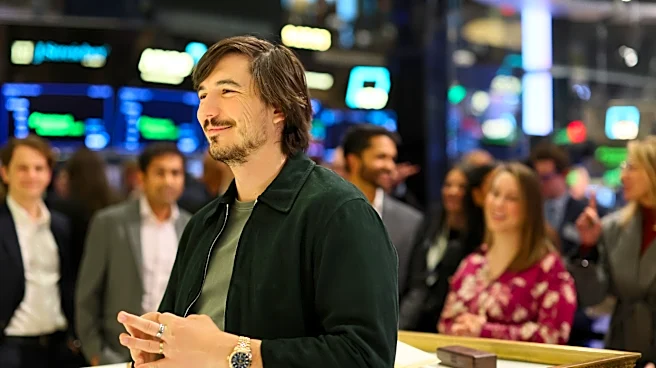
Vlad Tenev, Co-Founder, Chairman, and CEO of Robinhood, recently shared insights into early investment decisions related to his company. Tenev recounted a situation where a seed investment opportunity was initially passed on, despite the company being
valued at a $10 million cap at that stage. However, the same investor later participated in the Series A funding round. This investor subsequently led a significant $3.4 billion funding round for Robinhood. Tenev's remarks highlight the dynamic nature of early-stage venture capital and the potential for investors to re-evaluate opportunities as companies mature and demonstrate further potential. His discussion provides a glimpse into the strategic financial decisions that shaped Robinhood's trajectory from its nascent stages to becoming a prominent financial technology firm.
Why It's Important?
This discussion is important for understanding the venture capital landscape and the growth of significant fintech companies like Robinhood. It illustrates that initial investment decisions are not always final and that a company's perceived value can evolve rapidly. For entrepreneurs, it underscores the importance of continued development and demonstrating value, even after initial rejections. For investors, it highlights the potential for missed opportunities and the need for ongoing assessment of emerging companies. Robinhood's journey, marked by substantial funding rounds, has allowed it to disrupt traditional brokerage services, making investing more accessible to a broader demographic. The scale of the later investment led by the previously hesitant investor signifies the immense growth and market impact Robinhood achieved.
What's Next?
As Robinhood continues to innovate in the financial technology sector, discussions from its leadership, such as Tenev's, will likely continue to shape perceptions of investment strategies and market trends. The company is expected to further develop its platform, potentially introducing new features and expanding its user base. Future developments may include deeper integration of cryptocurrency trading, expansion into new financial products, or strategic partnerships. The insights shared by Tenev could influence how other startups approach fundraising and how venture capitalists evaluate early-stage companies, potentially leading to more flexible or long-term investment perspectives in the tech industry. Robinhood's ongoing evolution will be closely watched by both investors and competitors in the fintech space.
Beyond the Headlines
Tenev's anecdote about the seed investment decision touches upon broader themes in entrepreneurship and finance, including the subjective nature of valuation and the long-term vision required for successful venture capital. It implicitly raises questions about the metrics used to assess early-stage companies and how much weight should be given to potential versus immediate performance. The story also reflects the high-stakes environment of startup funding, where initial assessments can have massive implications for both founders and investors. Furthermore, it underscores the resilience often required by entrepreneurs to secure funding and build a successful enterprise, even when faced with early skepticism. This narrative contributes to the ongoing dialogue about risk, reward, and strategic foresight in the rapidly evolving tech and finance industries.