





What's Happening?
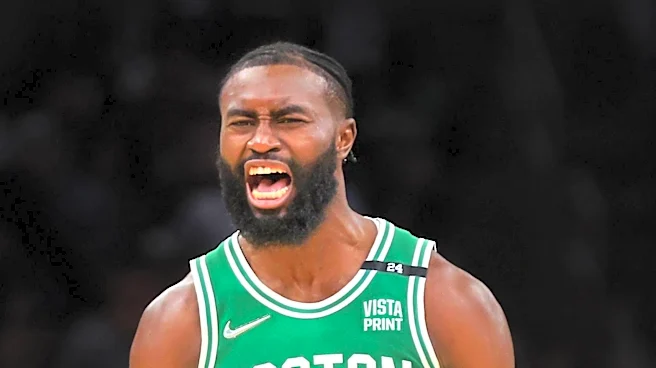
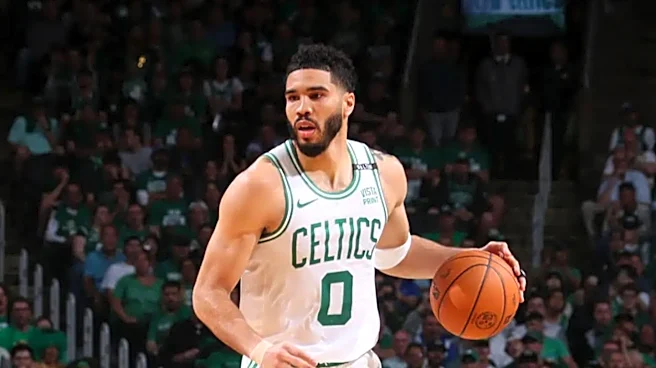
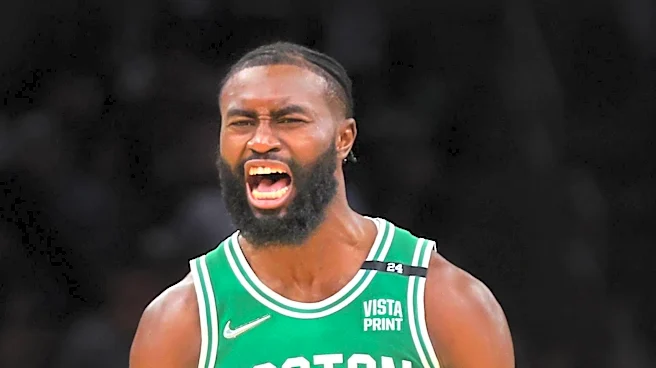
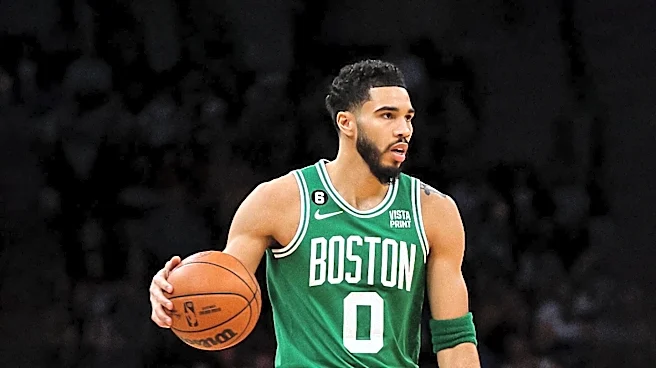
The Boston Celtics have traded Jaylen Brown to the Philadelphia 76ers in exchange for Paul George and multiple draft picks. This decision has sparked discussions about the Celtics' strategic direction, as Brown was a key player and community figure. The trade is seen
as a move to balance the team's salary cap and potentially benefit Jayson Tatum and coach Joe Mazzulla. However, it raises questions about the Celtics' competitiveness and the impact on team dynamics. The trade also reflects broader trends in the NBA, where teams are increasingly leveraging player trades to manage financial and strategic goals.
Why It's Important?
The trade of Jaylen Brown signifies a major shift in the Celtics' strategy, focusing on financial flexibility and future draft capital. While the move could provide long-term benefits, it also risks weakening the team's immediate competitive position. The decision highlights the challenges NBA teams face in balancing player talent, financial constraints, and strategic objectives. The Celtics' ability to navigate these complexities will be crucial in maintaining their status as a top contender in the league.
Beyond the Headlines
This trade underscores the evolving nature of NBA team management, where financial considerations and strategic planning are increasingly intertwined. The Celtics' decision to trade a star player like Brown reflects a broader trend of teams prioritizing long-term flexibility over short-term gains. This approach may influence other teams' strategies, potentially leading to more dynamic and unpredictable player movements in the league.