



What's Happening?
Economists are voicing significant concerns about a potential bubble in the artificial intelligence sector, fueled by the unprecedented rise of companies like Anthropic. Anthropic recently achieved a $1.5 trillion valuation after its IPO, a growth rate
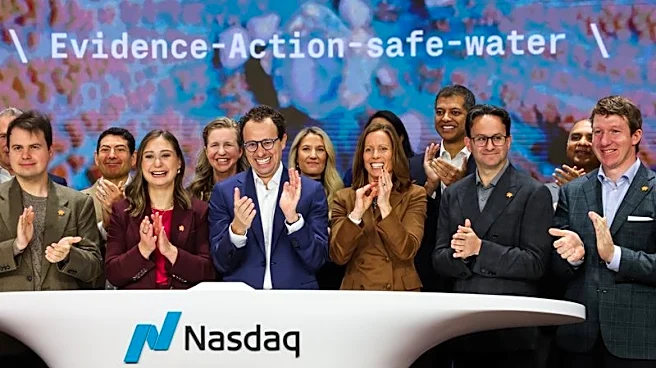
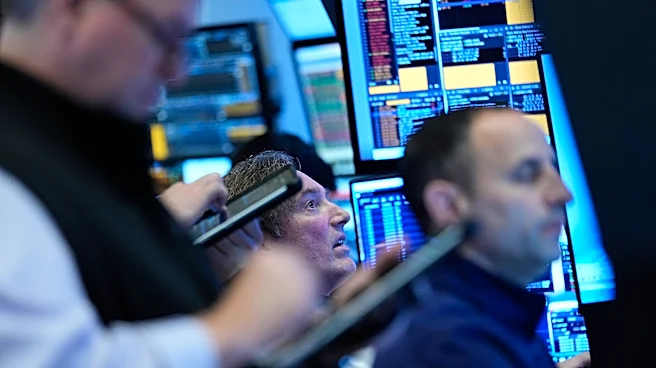
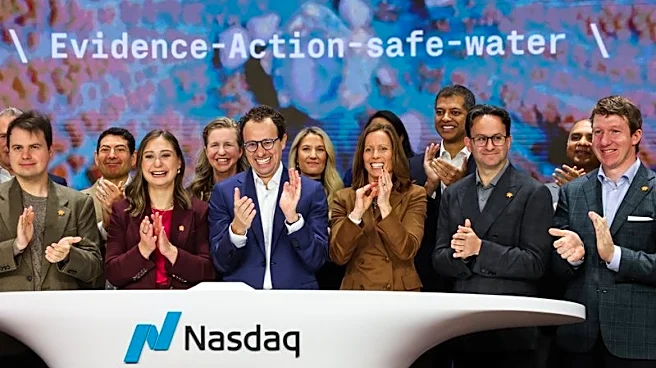
described by Harvard Business School professor David B. Yoffie as historically unmatched. This rapid expansion is leading experts to feel uncertain about the future of Wall Street and the broader economy. Gary Gensler, an MIT economist and former head of the US Securities and Exchange Commission, explicitly stated that it's already a bubble, pointing to the massive investments, estimated at $800 billion annually, being poured into AI infrastructure. The performance of Anthropic's stock post-IPO has added to these worries, as insider investors quickly cashed in, causing the stock to tumble by 12 percent and contributing to a 3.7 percent drop in the Nasdaq. This volatility, coupled with instances of exaggerated sales projections from companies like SpaceX, which rebranded itself as an AI company and made ambitious revenue forecasts, is intensifying fears of an impending market correction.
Why It's Important?
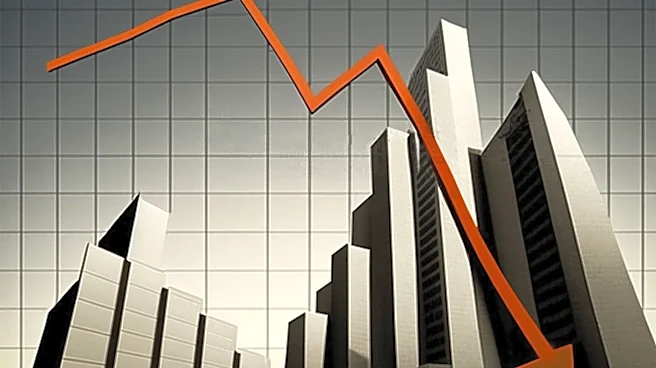
The concerns raised by economists about an AI bubble carry significant implications for the U.S. economy and financial markets. A bursting bubble could lead to substantial losses for investors, particularly those heavily invested in technology stocks, and potentially trigger a broader economic downturn or recession. The rapid valuation of AI companies, often based on future potential rather than current profitability, creates a precarious market environment. If the promised returns on AI investments do not materialize, or if the costs of AI tools remain prohibitively high for corporate customers, investor confidence could erode quickly. This situation could also impact venture capital funding for AI startups, slowing innovation and development in the sector. Furthermore, the interconnectedness of the tech sector means that a significant correction in AI stocks could have ripple effects across other industries, affecting employment, consumer spending, and overall economic stability.
What's Next?
Economists like Gary Gensler are advising caution, suggesting investors 'batten down some hatches' in anticipation of potential market turbulence. The immediate future will likely involve continued scrutiny of AI company valuations, investment flows, and the actual revenue generation capabilities of AI technologies. Investors will be closely watching for signs of a plateau or retrenchment in the AI sector, which could manifest as slower growth, reduced investment, or further stock price corrections. Regulatory bodies may also increase their oversight of AI companies, particularly concerning their financial reporting and market claims, to prevent speculative excesses. The performance of newly public AI companies, like Anthropic, will serve as a bellwether for investor sentiment and the broader health of the AI market. Companies will need to demonstrate tangible returns on AI investments to sustain investor confidence and avoid a more dramatic market correction.
Beyond the Headlines
The AI bubble discussion extends beyond mere financial metrics, touching upon the fundamental nature of technological innovation and market psychology. The current situation echoes historical tech booms and busts, raising questions about whether this time is truly different due to the transformative potential of AI. There's an underlying tension between the genuine revolutionary capabilities of AI and the speculative fervor that often accompanies groundbreaking technologies. This scenario also highlights ethical considerations regarding the responsible development and deployment of AI, as companies might prioritize rapid growth and market valuation over long-term societal impact or ethical safeguards. The eventual outcome of this 'AI bubble' will not only reshape the technology landscape but also influence how future disruptive technologies are perceived, funded, and integrated into the global economy, potentially leading to new regulatory frameworks and investment strategies.