




What's Happening?
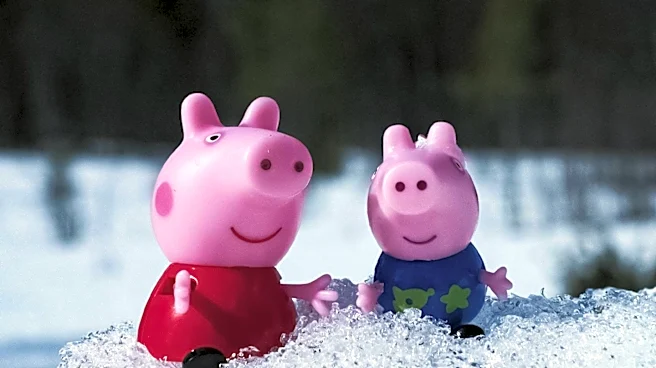
In July 2026, the children's animation 'Peppa Pig' became embroiled in a controversy involving the use of AI for children's voices and comments made by the character about musician Clairo. The American Youth Performers Association (AYPA) publicly criticized
the show's producers for including clauses in contracts that allow children's voices to be used by artificial intelligence. This sparked a protest involving nearly a thousand signatories. Additionally, Peppa Pig's character made dismissive remarks about Clairo during a media interview, which led to public rebuttals from musicians Charli XCX and PinkPantheress. The incident has drawn significant attention on social media, with Clairo's fans expressing their discontent through humorous posts.
Why It's Important?
The controversy highlights growing concerns in the entertainment industry about the ethical implications of using AI to replicate human voices, particularly those of children. The AYPA's protest underscores the potential exploitation of young performers, as parents may feel pressured to agree to unfavorable terms to secure roles for their children. The backlash from musicians also points to the broader cultural impact of AI in creative fields, where authenticity and respect for artists are paramount. This incident could lead to increased scrutiny of AI usage in media and entertainment, potentially influencing future contract negotiations and industry standards.
What's Next?
The producers of 'Peppa Pig' have yet to address the specific contract arrangements publicly, but the controversy may prompt them to reconsider their policies regarding AI. The AYPA's call for contracts to exclude AI usage could lead to industry-wide changes if other organizations and stakeholders join the movement. Musicians and artists may continue to voice their concerns, potentially leading to a broader dialogue about the role of AI in creative industries. The outcome of this controversy could set a precedent for how AI is integrated into entertainment and media production.
Beyond the Headlines
This situation also raises questions about intellectual property rights and the protection of performers' voices in the digital age. As AI technology advances, the line between human and machine-generated content becomes increasingly blurred, challenging existing legal frameworks. The entertainment industry may need to adapt by developing new guidelines and protections to ensure that performers' rights are safeguarded. Additionally, the cultural implications of AI's role in media could influence public perception and acceptance of AI-generated content, shaping the future of entertainment.