


What's Happening?
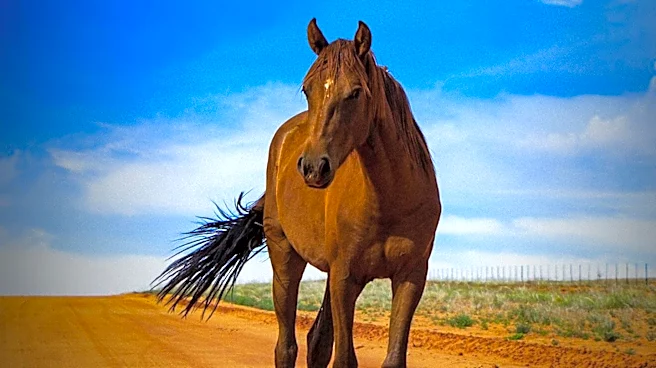
Los Angeles singer-songwriter Mikayla Khramov is creating her debut album with an unusual collaborator: a rescue horse named Yupia. As reported by USA Today, Yupia, a 7-year-old American Bashkir, contributes to the music by interacting with instruments,
primarily by sliding his nose across guitar strings and pulling them with his teeth. Khramov discovered Yupia's musical inclination while volunteering at a horse rescue in Moorpark, California. Initially, Yupia was uneasy around people, but after about nine months of building trust, Khramov introduced instruments into his environment. She emphasizes that Yupia is not a trained performer, and his musical contributions developed naturally through patience and repetition. Khramov is sampling Yupia's playing, along with sounds of him running and whinnying, and building songs around these elements with Portuguese musicians, blending dark Americana folk with Portuguese influences, experimental electronic folk, and Spanish guitar riffs.
Why It's Important?
This unique musical collaboration highlights innovative approaches to music creation and the unexpected sources of artistic inspiration. It challenges traditional notions of what constitutes a musical artist or collaborator, demonstrating that creativity can emerge from interspecies interactions. For the music industry, it represents a novel marketing angle and a story that can capture public interest, potentially drawing attention to Khramov's debut album. Beyond the artistic realm, the story underscores the intelligence and emotional capacity of animals, particularly rescue animals, and the profound bonds that can form between humans and animals. It also brings attention to animal welfare and rescue efforts, as Yupia's background as an untrained rescue horse is central to the narrative. This project could inspire other artists to explore unconventional collaborations and push the boundaries of musical expression.
What's Next?
Mikayla Khramov plans to return to Portugal in September for the final mixing of her debut album. The project is self-funded, making its production expensive, especially with Los Angeles studio costs. After the music is completed, Khramov intends to present it to record labels. She also plans to release an EP before the full album and continues to share videos of the recording process on Instagram, building anticipation for the release. The success of this album could pave the way for more animal-inclusive artistic projects and potentially influence how the music industry perceives and markets unique collaborations. The story's viral potential, driven by Yupia's involvement, could also lead to broader discussions about animal intelligence and the therapeutic benefits of human-animal interaction.
Beyond the Headlines
This story transcends a simple musical project, touching upon deeper themes of communication, trust, and the unexpected forms that artistic expression can take. It challenges anthropocentric views of creativity by showcasing an animal's genuine engagement with music, suggesting a form of interspecies communication that goes beyond conventional understanding. The narrative of Yupia, a rescue horse who was initially wary of humans, finding a unique connection through music with Khramov, offers a powerful message about patience, empathy, and the healing power of creative outlets. Ethically, it raises questions about the definition of artistry and collaboration, and how we value contributions from non-human entities. Culturally, it could contribute to a growing appreciation for animal intelligence and the diverse ways in which humans and animals can connect and create together, fostering a more inclusive view of the creative process.