


What's Happening?
Gilbert Arenas, former Washington Wizards star, has publicly supported Stephen A. Smith in the ongoing debate regarding the Los Angeles Lakers' strong start to the NBA season, which Smith characterized as a 'white-led surge.' Smith's comments were made
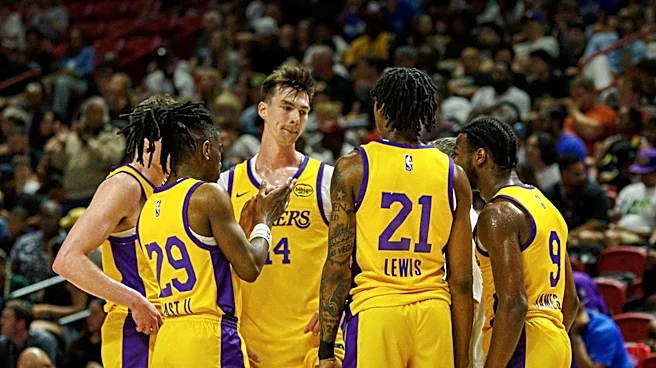
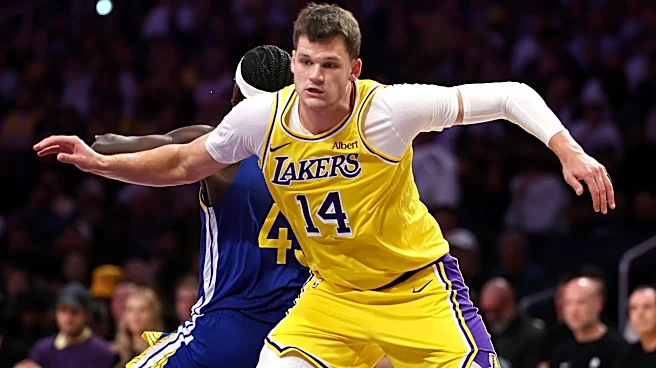
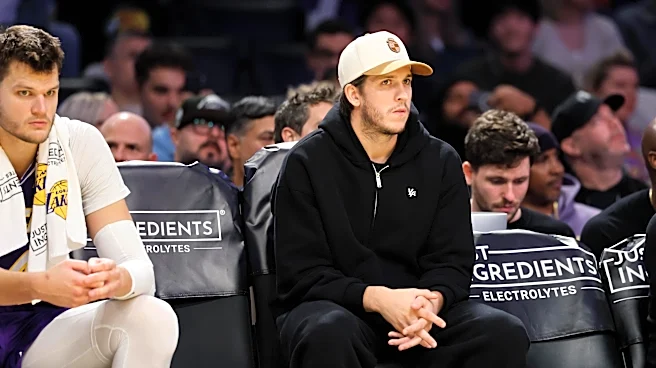
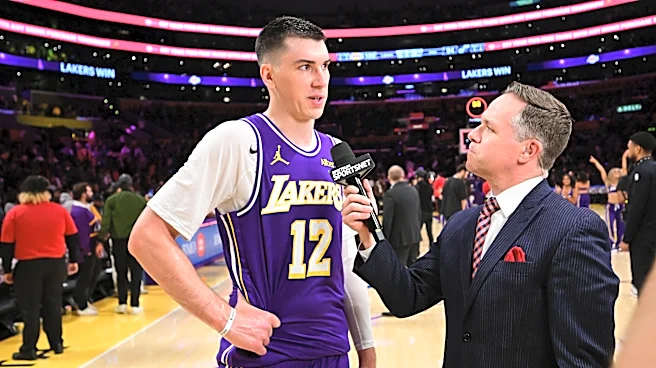
after the Lakers achieved a 13-2 record, led by players Luka Dončić, Austin Reaves, and Walker Kessler. Arenas argued that discussions about race have historically influenced how players, fans, and pundits perceive competition in the NBA. He dismissed criticisms from individuals like ESPN analyst Jay Williams, who called Smith's framing 'disturbing' and compared it to rhetoric from earlier eras. Arenas contended that racial dynamics have always been an underlying factor in NBA rivalries, citing examples such as Magic Johnson's matchups with Larry Bird and Michael Jordan's dominance.
Why It's Important?
This debate highlights the persistent and often sensitive role of race in sports commentary and public perception within the U.S. The discussion, initiated by Stephen A. Smith and now backed by Gilbert Arenas, underscores how racial identity can become a focal point, even in contexts where talent and performance are ostensibly the primary metrics. For the NBA, a league with a predominantly Black player base, these conversations can spark broader discussions about representation, historical biases, and the language used to describe athletic achievements. It also reveals a divide in how sports figures and analysts interpret the significance of race, with some arguing for a color-blind assessment of talent and others asserting that racial context is an undeniable part of the sport's narrative and history. The controversy could influence how sports media approaches discussions of player demographics and team compositions in the future.
What's Next?
The debate is likely to continue generating discussion among sports analysts, former players, and fans, particularly on sports talk shows and social media platforms. Stephen A. Smith has indicated he will not back down from his stance, suggesting further commentary on the topic. Other sports personalities may weigh in, either supporting or refuting Arenas and Smith's perspectives, potentially leading to more nuanced or intensified discussions about race in professional basketball. The ongoing performance of the Los Angeles Lakers, particularly the contributions of Dončić, Reaves, and Kessler, will likely serve as a continuous backdrop for these conversations. This could also prompt the NBA or individual teams to address diversity and inclusion in their public messaging, or it might lead to internal discussions about how such sensitive topics are handled by affiliated commentators.
Beyond the Headlines
The controversy extends beyond mere sports analysis, touching upon deeper societal issues concerning race, identity, and public discourse in the U.S. Gilbert Arenas's previous comments on colorism and his wife Melli Monaco's counter-arguments about historical discrimination faced by darker-skinned individuals suggest a broader engagement with racial complexities. The debate reflects a tension between the ideal of a meritocratic society where race is irrelevant and the reality of a society where racial identity continues to shape experiences and perceptions. It also raises questions about the responsibility of public figures, particularly those in media, to navigate sensitive topics without perpetuating harmful stereotypes or inadvertently fueling racial divisions. The discussion could contribute to a re-evaluation of how race is discussed in mainstream media, particularly in entertainment and sports, and whether current approaches adequately address the complexities of racial dynamics.