




What's Happening?
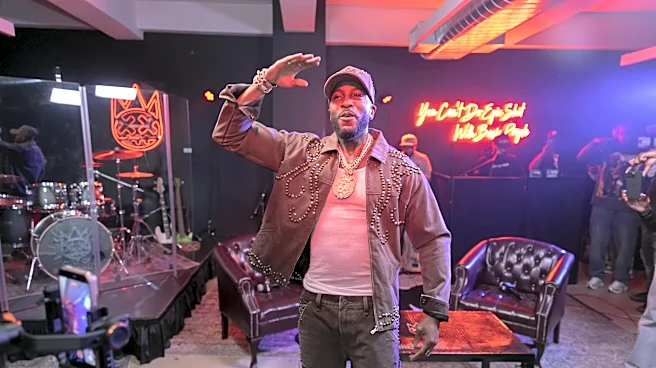
Harlem rapper Cam’ron recently revealed his strategic decision to appear on ESPN's "First Take" without receiving payment. During an episode of "Talk With Flee," Cam’ron explained that his primary motivation was to leverage ESPN's extensive reach, which
he noted is in "a hundred million homes," to promote his own sports platforms. He viewed the appearance as an investment in his brand, aiming to attract new viewers to his shows, such as "It Is What It Is," which he co-hosts with fellow rapper Ma$e. This approach prioritizes exposure and audience conversion over immediate financial compensation. While journalist Roland Martin questioned this strategy, citing a decrease in ESPN's viewership since its peak and suggesting Cam’ron should have negotiated for payment, Cam’ron maintained that the broader audience introduction was more valuable than a paycheck. According to Baller Alert, Cam’ron's goal was to introduce himself to a wider audience and convert ESPN's viewers into followers of his own content.
Why It's Important?
Cam’ron's decision highlights a contemporary business strategy in media and entertainment, where personal branding and audience acquisition can sometimes outweigh immediate financial gain. In an increasingly fragmented media landscape, leveraging established platforms like ESPN, even without direct payment, can be a powerful tool for independent creators to expand their reach and build their own ventures. This approach challenges traditional models of media engagement, where talent is typically compensated for appearances. It underscores the value of exposure in the digital age, particularly for individuals seeking to grow their own content ecosystems. The debate between Cam’ron and Roland Martin also reflects differing philosophies on monetizing media presence: one prioritizing long-term brand building through broad exposure, and the other focusing on immediate, tangible compensation. This dynamic is particularly relevant for artists and entrepreneurs who are building independent media empires and seeking to diversify their revenue streams beyond traditional entertainment avenues.
What's Next?
Cam’ron's continued focus will likely be on expanding the audience for his sports platforms, such as "It Is What It Is," by strategically utilizing various media opportunities. His approach suggests a long-term vision for building credibility and visibility for his independent ventures. Other content creators and personalities may observe Cam’ron's strategy to determine its effectiveness in converting mainstream exposure into dedicated viewership for their own projects. The ongoing evolution of media consumption and the rise of independent content creators will likely lead to more discussions and varied approaches regarding compensation for media appearances. This could influence how networks and personalities negotiate future collaborations, potentially leading to more flexible or performance-based agreements that prioritize audience growth and brand synergy.
Beyond the Headlines
This scenario touches upon the evolving economics of media and celebrity in the digital age. The traditional model of talent being paid for every appearance is being challenged by the rise of influencer marketing and content entrepreneurship. For figures like Cam’ron, who have established brands, the value proposition shifts from a one-off payment to the potential for long-term audience growth and direct monetization of their own platforms. This reflects a broader trend where creators are increasingly seeking to own their audience and intellectual property, rather than solely relying on third-party platforms for income. The ethical implications of working without pay for large corporations, even for strategic reasons, can also be debated, particularly concerning the precedent it sets for emerging talent. However, for established figures, it can be a calculated risk that prioritizes strategic market positioning and brand expansion over immediate financial returns, ultimately aiming for greater autonomy and control over their content and revenue streams.