



What's Happening?
The Office of the U.S. Trade Representative (USTR) has extended Section 301 tariff exemptions for 178 Chinese products until January 9, 2027. These exemptions, which were set to expire on November 9, 2026, became effective on November 10, 2026. Concurrently,
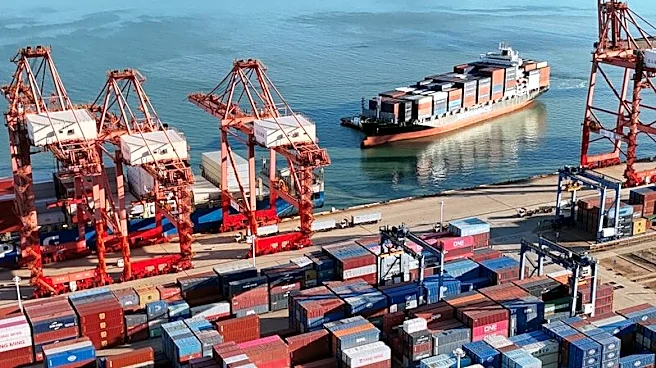
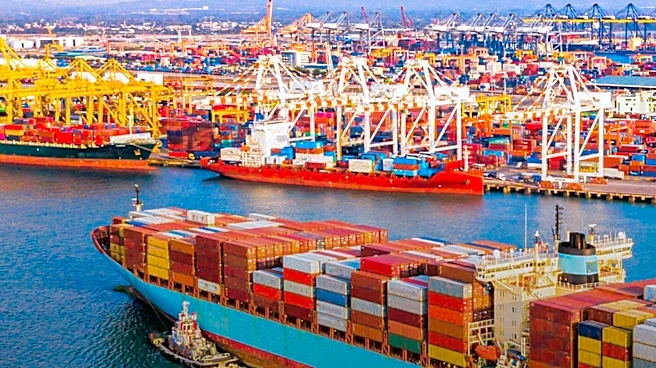
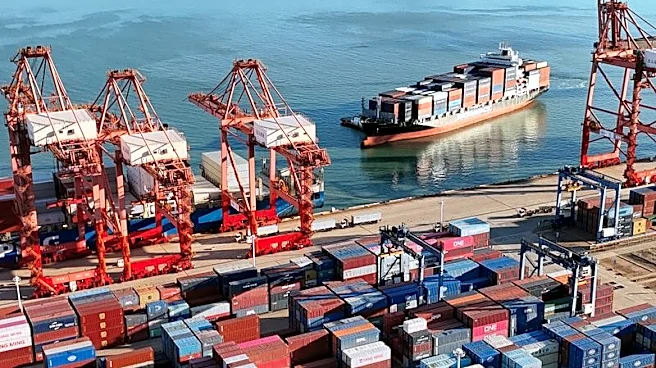
the USTR also extended the suspension of tariffs on Chinese ship port fees and China-made ship-to-shore cranes to the same expiration date. In a reciprocal move, China's Customs Tariff Commission of the State Council announced on November 9 that it would suspend the 24% additional tariff rate on U.S. goods for two months, effective from November 10, 2026, while retaining a 10% rate. This coordinated action follows a video call between China's Vice Premier He Lifeng and U.S. Treasury Secretary Scott Bessent and Trade Representative Jamieson Greer, where trade and economic issues were discussed.
Why It's Important?
This synchronized extension of tariff exemptions by both the U.S. and China is seen by market observers as an effort to maintain a relatively eased trade and economic relationship between the two nations. The U.S. exemptions primarily cover intermediate and capital goods, including pump components, electronic parts, motors, medical supplies, compressor parts, PCB circuit boards, and air-conditioning and heat-pump components, as well as solar manufacturing equipment. Finished home appliances are not included. For companies, particularly those in B2B component sectors supplying overseas brands and factories, these extensions provide a crucial buffer, reducing costs and uncertainty. The ability for goods already in transit to qualify for the post-exemption rate based on the 'date of entry for consumption' offers flexibility in cost allocation and pricing strategies, benefiting importers and potentially stabilizing supply chains for these specific products.
What's Next?
The current extensions by both the U.S. and China are temporary, with expiration dates in early 2027 for the U.S. and approximately two months for China. This suggests that the measures are intended as a buffer period rather than a long-term resolution to trade tensions. The decision on whether to renew these exemptions after their expiration remains undecided for the U.S., and China's retained 10% tariff rate could be adjusted. Businesses will need to monitor future announcements closely to anticipate potential changes in tariff policies. The ongoing dialogue between U.S. and Chinese trade officials will likely continue to shape the future of these trade relations, with potential for further negotiations or adjustments to tariff structures.
Beyond the Headlines
The strategic timing and reciprocal nature of these tariff adjustments highlight the complex and interdependent economic relationship between the U.S. and China. While these exemptions offer short-term relief for specific industries, they do not fundamentally alter the broader trade landscape shaped by the Section 301 investigation. The focus on intermediate and capital goods in the U.S. exemptions suggests an effort to support manufacturing supply chains, potentially mitigating inflationary pressures or supporting domestic industries reliant on these components. However, the exclusion of finished home appliances indicates a continued selective approach to tariffs. The 'buffer window' approach underscores the delicate balance both countries are attempting to strike between addressing trade imbalances and avoiding further economic disruption, reflecting a pragmatic, albeit temporary, de-escalation of trade friction.