






What's Happening?
Universal Music Group (UMG) has unveiled a comprehensive global strategy for artificial intelligence (AI) aimed at balancing technological innovation with the protection of artist rights and intellectual property. Sir Lucian Grainge, Chairman and CEO
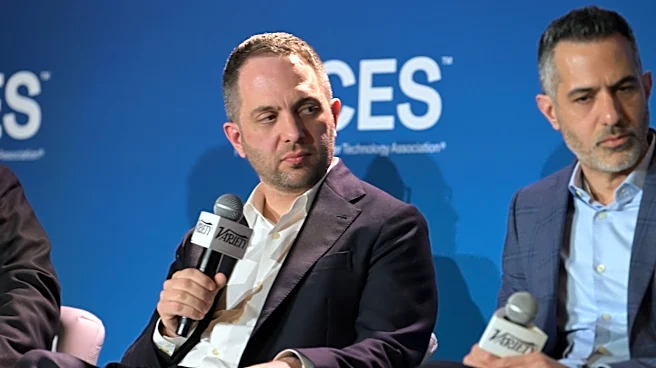
of UMG, has emphasized a firm stance against what he terms 'AI slop' and irresponsible economic models that devalue human art. UMG's approach, detailed by Chief Digital Officer Michael Nash at a recent conference, involves creating a 'walled garden' ecosystem for streaming. This strategy advocates for user-generated AI tracks to remain within the platforms where they are created, preventing direct competition with official releases on services like Spotify or Apple Music. A key component of this strategy is a multi-year agreement with ElevenLabs, announced in September, to launch an AI-powered music creation platform. This platform will enable fans to produce remixes, mashups, and vocal interpretations using only pre-authorized content from UMG's catalog. Additionally, UMG has collaborated with NVIDIA to enhance its responsible AI infrastructure, utilizing NVIDIA's 'Music Flamingo' model to improve music discovery by processing complex metadata.
Why It's Important?
This strategic shift by Universal Music Group holds significant implications for the U.S. music industry, artists, and digital platforms. By establishing a controlled environment for AI-generated music, UMG aims to safeguard the revenue streams of artists and labels, ensuring they are compensated for the use of their intellectual property in AI models. This move could set a precedent for how other major record labels and content creators approach AI integration, potentially shaping future licensing agreements and industry standards. The emphasis on 'explicit consent' for training data and 'closed ecosystems' for fan creations directly addresses concerns about unauthorized use of artistic works and the potential for AI to dilute the value of original content. For consumers, the introduction of a 'kill switch' to filter 100% AI-generated music, supported by over 80% of U.S. consumers according to UMG reports, reflects a growing demand for transparency and control over their listening experience. This strategy could also redefine the culture of remixing and bootlegging, channeling fan creativity into monetized and regulated environments.
What's Next?
UMG's AI strategy is expected to continue evolving with further technological alliances and policy implementations. The ongoing collaboration with ElevenLabs will likely lead to the launch and expansion of their AI-powered music creation platform, offering new avenues for fan engagement and content monetization. The partnership with NVIDIA, leveraging the 'Music Flamingo' model, suggests a future where music discovery is more sophisticated and personalized, potentially influencing how listeners interact with music catalogs. Future developments may include more detailed frameworks for artist compensation related to AI-generated content and further integration of AI tools within UMG's operational infrastructure. The industry will be watching to see if UMG's 'walled garden' approach becomes a model for other entertainment sectors grappling with AI, potentially leading to broader adoption of similar licensing and content management strategies across the U.S. and global markets. The success of these initiatives will depend on their ability to balance innovation with fair compensation and artist protection.
Beyond the Headlines
Beyond the immediate business implications, UMG's AI strategy touches upon deeper ethical and cultural dimensions within the music industry. The company's firm stance against 'AI slop' highlights a broader debate about the value of human artistry in an age of increasingly sophisticated AI. By advocating for explicit consent for training data and ensuring artists are compensated, UMG is attempting to establish ethical guidelines for AI development in creative fields. This approach could influence legal frameworks surrounding intellectual property in the digital age, particularly concerning generative AI. Culturally, the strategy aims to reconfigure the long-standing tradition of remixing and bootlegging, moving it from an often-unregulated space to a licensed and monetized one. While this offers new revenue streams and legal clarity, it also raises questions about the spontaneity and freedom that have historically characterized fan-driven creative practices. The 'kill switch' feature also underscores a societal concern about the authenticity of content and the desire for human-created art in an increasingly AI-saturated world.