



What's Happening?
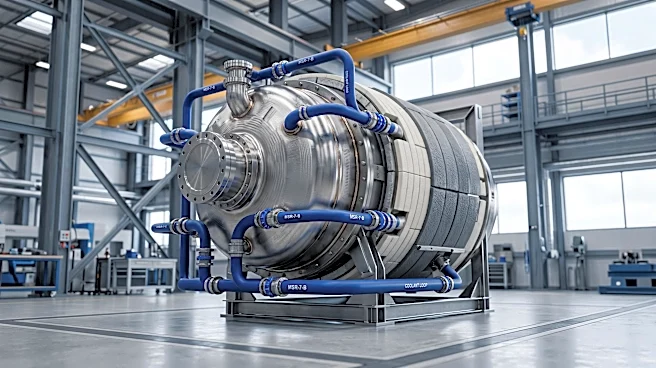
Commonwealth Fusion Systems (CFS), a privately held energy technology company based in Devens, Massachusetts, is actively recruiting a Senior Opto-mechanical Engineer. This role is crucial for the ongoing assembly and commissioning of the SPARC tokamak,
a magnetic fusion device designed to produce more fusion power than it consumes. The engineer will be embedded with the Long Wavelength Diagnostics team, focusing on the opto-mechanical design and implementation of diagnostic subsystems such as Laser Interferometry, Thomson Scattering, and UV/VIS/IR Imaging. Responsibilities include designing mounts, enclosures, and packaging for optical and waveguide assemblies, developing alignment systems, and performing structural and thermal analyses. The position requires leading designs through review, procurement, and build phases, working closely with diagnosticians, scientists, and other engineers to ensure detailed, cost-effective, and manufacturable designs. CFS, founded in 2018, has raised $4 billion in capital and employs over 1,100 people, aiming to deliver commercially viable fusion power plants.
Why It's Important?
This recruitment highlights the critical phase of development for fusion energy technology in the U.S., particularly for CFS's SPARC project. The successful operation of SPARC, which aims to achieve net energy gain (Q>1), is a significant milestone for the future of clean energy. The Senior Opto-mechanical Engineer's role is vital for ensuring the precision and reliability of diagnostic systems, which provide essential scientific and control data for SPARC's operation and inform the design of future fusion reactors like ARC. Advancements in fusion energy could offer a virtually limitless, carbon-free power source, significantly impacting the U.S. energy landscape by reducing reliance on fossil fuels and enhancing energy security. The project's success could also spur economic growth through job creation in high-tech manufacturing and research, positioning the U.S. as a leader in advanced energy solutions. The company's substantial capital raises and rapid growth underscore the increasing investment and confidence in fusion technology as a viable long-term energy solution.
What's Next?
The immediate next step for CFS is to fill this critical engineering position to advance the SPARC tokamak project. Once the Senior Opto-mechanical Engineer is on board, they will focus on closing out remaining designs and bringing diagnostic systems from the tokamak through the Tokamak Hall and into the Diagnostic Labs. This involves hands-on support for assembly, installation, alignment, calibration, and commissioning. The successful integration and operation of these diagnostic systems are paramount for SPARC to achieve its Q>1 goal. Following SPARC's anticipated success, the insights gained will be applied to the design and construction of ARC, CFS's planned commercial fusion power plant. The company will continue to collaborate with policymakers and suppliers to build the necessary infrastructure for a future fusion energy industry, potentially leading to the deployment of commercial fusion power within the next decade or two.
Beyond the Headlines
The pursuit of fusion energy by companies like CFS represents a profound shift in the global energy paradigm, moving towards a future powered by the same process that fuels the sun. Beyond the immediate technical challenges, the development of commercially viable fusion power plants raises significant ethical and societal implications. It could address climate change by providing a clean energy source without the long-lived radioactive waste associated with nuclear fission. However, the high upfront costs and complex engineering involved mean that equitable access to this technology and its benefits will be a critical consideration. The success of SPARC could also trigger a 'fusion race' among nations, similar to the space race, with geopolitical implications for energy dominance and technological leadership. Furthermore, the project's emphasis on precision engineering and advanced materials could drive innovation across various industries, fostering a new era of scientific and technological advancement.