






What's Happening?
Craig Litwin, former Sebastopol City Council member, has co-founded the Farming Club Coalition with Jason Bradford, a farmer from Corvallis, Oregon. The initiative aims to establish and spread the concept of farming clubs across communities. Unlike traditional
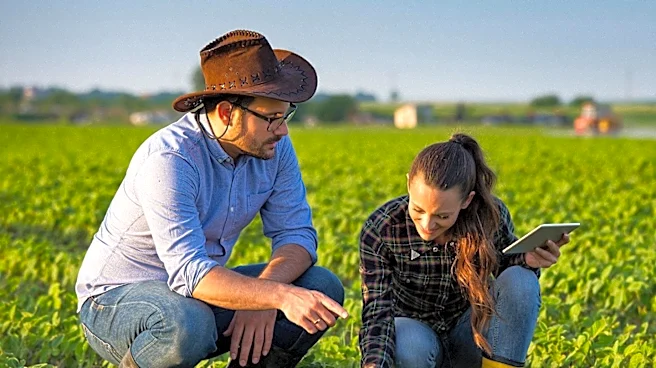
gardening clubs or Community Supported Agriculture (CSA) models, farming clubs involve members collectively farming a plot of land, with a professional farmer acting as a coach, and then dividing the harvest among themselves. This non-commercial approach emphasizes shared labor, community building, and direct access to organic produce. Litwin was inspired by Bradford's model, which originated when friends helped Bradford on his farm after an injury, enjoying the work and the produce. The Farming Club Coalition, fiscally sponsored by the Post Carbon Institute, launched its first webinar in September, attracting participants globally. Litwin envisions a membership cost of around $50 per month, providing members with their annual vegetable needs.
Why It's Important?
The Farming Club Coalition offers an innovative model for local food production and community engagement, addressing several contemporary challenges. It promotes food security by enabling direct access to fresh, organic produce, reducing reliance on commercial supply chains. This model fosters community resilience by bringing people together to work the land, share knowledge, and build social connections. For farmers, it provides an alternative income stream as coaches, supplementing their earnings while reducing the labor burden of traditional farming. The non-commercial nature of farming clubs also circumvents some of the complexities and regulations associated with selling produce. This initiative could empower communities to take greater control over their food systems, promote sustainable agricultural practices, and enhance local economies by keeping food production and consumption within the community.
What's Next?
The Farming Club Coalition plans to expand its network by encouraging individuals and groups to establish their own farming clubs in their respective communities. Litwin is actively seeking land in Sebastopol to launch the first local farming club, requiring about an acre with sufficient water, fencing, and gopher protection. The coalition will continue to share information and resources through webinars and its website (farmingclubs.org) to support new club formations. Future efforts will likely focus on developing a robust support system for new farming club coaches and members, potentially including best practices guides, networking opportunities, and training programs. The success of these initial clubs will be crucial in demonstrating the model's viability and encouraging wider adoption across the U.S. and internationally.
Beyond the Headlines
The Farming Club Coalition represents a deeper movement towards localized, community-driven solutions for food production and sustainability. In an era of increasing concerns about food miles, industrial agriculture, and climate change, this model offers a tangible way for individuals to reconnect with their food sources and participate directly in sustainable practices. It challenges the conventional consumer-producer dynamic by transforming consumers into active participants in the food system. Furthermore, the emphasis on shared labor and community meals addresses issues of social isolation and promotes a sense of collective well-being. This initiative could contribute to a broader cultural shift towards valuing local food economies, fostering ecological literacy, and strengthening community bonds, potentially influencing urban planning and land use policies to support such initiatives.