


What's Happening?
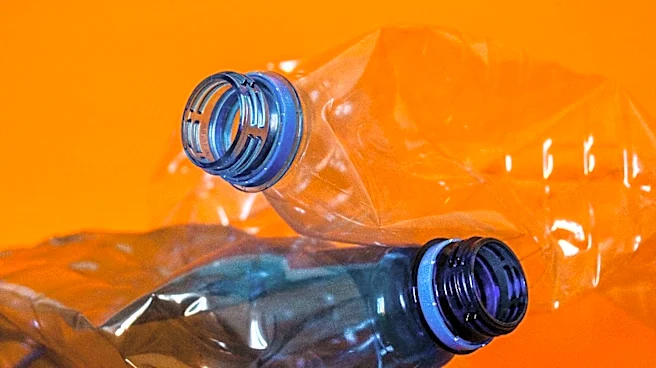
Researchers at Virginia Tech, led by chemical engineer Guioliang 'Greg' Liu, have developed a method to convert polyvinyl chloride (PVC) waste into high-performance industrial lubricants. PVC, commonly used in pipes and credit cards, is notoriously difficult
to recycle due to its additives and chlorine content. Liu's team discovered that by breaking down PVC in a solvent with aluminum trichloride and alpha-olefins, and heating it, they could produce a thick oil suitable for use as a lubricant. This innovation addresses the ecological issue of PVC waste, which often ends up in landfills, by repurposing it into a valuable product.
Why It's Important?
This development is significant as it offers a sustainable solution to the problem of PVC waste, which is a major environmental concern due to its non-biodegradable nature. By converting PVC into lubricants, the research not only reduces landfill waste but also meets the growing market demand for eco-friendly products. This innovation could lead to a shift in how industries approach plastic waste, promoting a circular economy where materials are continuously reused. The success of this project could inspire further research into recycling other difficult-to-recycle plastics, potentially transforming waste management practices.
What's Next?
The research team is focused on making the process more sustainable, scalable, and cost-effective for widespread industrial use. If successful, this could lead to broader adoption of the technology across various industries, reducing reliance on traditional, less sustainable lubricants. The next steps involve refining the process to enhance its efficiency and exploring partnerships with industries that could benefit from this eco-friendly lubricant. The potential for commercialization could also drive further investment in similar recycling technologies.