






What's Happening?
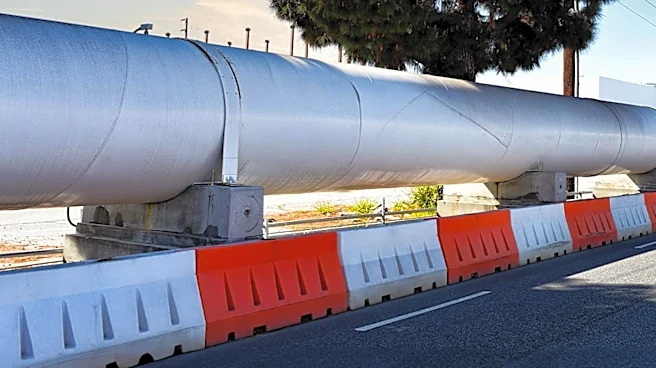
Chesapeake Utilities Corporation has announced an expansion of its 2026 capital plan, increasing its spending guidance to between $550 million and $600 million. This move is part of the company's strategy to advance the $1.20 billion Florida Energy Pathway
pipeline, which is expected to be operational by 2030. The company reported higher sales in the second quarter of 2026, with revenues reaching $201.9 million and a net income of $25.4 million. Chesapeake Utilities also reaffirmed its 2028 earnings guidance, projecting earnings per share between $7.75 and $8.00. The company declared a quarterly dividend of $0.735, to be paid in October 2026. The Florida Energy Pathway project is central to Chesapeake's long-term growth plans, although it also increases the company's regulatory and construction risks, particularly in Florida.
Why It's Important?
The expansion of Chesapeake Utilities' capital plan and the advancement of the Florida Energy Pathway pipeline are significant for several reasons. Firstly, they underscore the company's commitment to expanding its infrastructure and service capabilities, which could enhance its market position in the regulated gas and energy delivery sector. The increased capital spending highlights the company's focus on long-term growth, but it also brings attention to potential risks, such as regulatory challenges and rising project costs. Successful execution of these projects could lead to substantial returns, benefiting shareholders and potentially increasing the company's valuation. However, failure to manage these risks could negatively impact the company's financial health and investor confidence.
What's Next?
Chesapeake Utilities will need to navigate regulatory approvals and manage construction costs effectively to ensure the success of the Florida Energy Pathway pipeline. The company will likely focus on securing favorable regulatory outcomes to support its expanded capital plan. Investors and stakeholders will be closely monitoring the company's progress and any updates on regulatory decisions or cost management strategies. The outcome of these efforts will be crucial in determining the company's ability to achieve its projected earnings and maintain its growth trajectory.