
What's Happening?
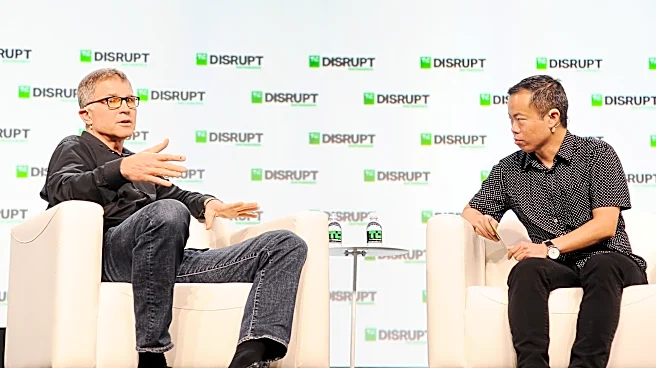
Kevin Roose, co-host of the 'Hard Fork' podcast and author of a new book on Artificial General Intelligence (AGI), argues that human-level general intelligence has effectively arrived, leading him to pivot
his career towards video podcasting. Roose, who recently departed The New York Times to establish a six-person podcast company, believes the future of media lies in video and direct audience relationships, rather than traditional text. He contends that the technical skill of writing is now comparable to coding or math, and that human objection to AI-produced prose is the primary differentiator. Roose highlights a market gap, suggesting that legacy media overlooked the rise of platforms like YouTube, which he sees as an opportunity for journalists to engage audiences through video content. His company now utilizes AI agents extensively in its production workflow, managing tasks from exporting video formats and transcribing shows to handling contracts and bookkeeping, with human oversight.
Why It's Important?
This shift by a prominent media figure like Kevin Roose underscores a significant transformation within the U.S. media landscape, driven by advancements in AI. His decision to prioritize video podcasting over traditional text-based journalism reflects a growing sentiment that AI's capabilities are fundamentally altering how content is created, consumed, and monetized. This could have profound implications for news organizations, publishing houses, and individual journalists. If Roose's prediction holds true, media companies that fail to adapt to video-centric strategies and direct audience engagement models may struggle to remain relevant. The increased reliance on AI agents for production tasks also signals a potential restructuring of media operations, where AI handles routine processes, allowing human talent to focus on creative and strategic roles. This could lead to job displacement in some areas while creating new opportunities in others, particularly for those skilled in leveraging AI tools.
What's Next?
The media industry is likely to observe Kevin Roose's venture closely as a case study for how journalists and content creators can navigate the evolving digital landscape. His bet on video podcasting and the extensive use of AI agents in his company's workflow could inspire similar shifts across the industry. Media organizations may accelerate their investments in video content production and explore more direct-to-consumer models to build stronger audience relationships. There will also be continued debate and development around AI ethics in journalism, particularly concerning the disclosure of AI-generated content and maintaining audience trust. The success or challenges faced by Roose's model could influence future hiring practices, technology adoption, and business strategies for media entities in the U.S., potentially leading to a more bifurcated media market with highly specialized human-led content and AI-assisted mass production.
Beyond the Headlines
Roose's move highlights a deeper philosophical question about the value of human-authored content in an age of increasingly sophisticated AI. While he uses AI for production, he maintains that human writing is crucial for establishing trust and emotional connection with readers. This distinction raises ethical considerations for the media industry: how much AI integration is acceptable before it erodes the perceived authenticity and credibility of journalism? The tension between leveraging AI for efficiency and preserving the human element in storytelling will be a defining challenge. Furthermore, the concept of 'effort signaling' – demonstrating the human effort behind content – could become a new metric for value in a world saturated with AI-generated material. This could lead to a re-evaluation of journalistic practices, emphasizing transparency and the unique contributions of human intellect and creativity.