



What's Happening?
The shift towards remote work has highlighted the importance of establishing a dedicated and functional home office. Many individuals are converting underutilized areas within their homes, such as staircase landings or built-in closets, into workspaces.
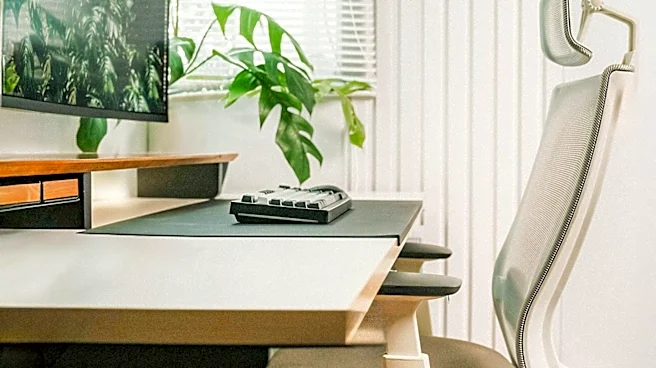
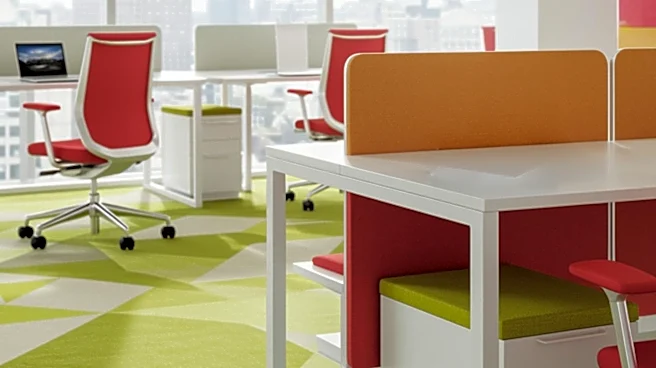
This approach aims to create a distinct environment conducive to productivity, avoiding the disruption of using living or bedroom spaces for work. Key recommendations for setting up an ideal home office include identifying a suitable, often overlooked, space and investing in specialized office furniture. Desks with integrated features like drawers, shelves, charging stations, or power outlets are particularly advised to maintain an organized and clutter-free workspace. The emphasis is on creating a long-term, efficient setup rather than relying on temporary or makeshift arrangements.
Why It's Important?
The growing prevalence of remote work, a trend significantly accelerated by recent global events, makes effective home office setups crucial for the U.S. workforce. Investing in proper home office infrastructure directly impacts employee productivity, well-being, and the overall efficiency of businesses operating with remote teams. A well-designed home office can reduce physical strain through ergonomic furniture, minimize distractions, and foster a professional mindset, even within a home environment. This shift also has implications for the furniture industry, driving demand for specialized home office solutions. For individuals, a dedicated workspace can improve work-life balance by clearly delineating professional and personal spaces, ultimately contributing to sustained career performance and mental health.
What's Next?
As remote and hybrid work models continue to evolve, the demand for innovative home office solutions is expected to grow. Manufacturers and retailers will likely focus on developing more compact, multi-functional, and ergonomically advanced furniture tailored for diverse home environments. There may also be an increased emphasis on smart home integration for office spaces, incorporating advanced lighting, climate control, and connectivity features. Furthermore, interior design trends will continue to adapt, offering creative solutions for maximizing small spaces and integrating professional aesthetics into residential settings. Businesses might also explore providing stipends or guidance for employees to optimize their home office setups, recognizing the direct link between a functional workspace and employee output.
Beyond the Headlines
The emphasis on dedicated home office spaces reflects a broader cultural shift in how Americans perceive work and home life. It challenges traditional notions of the workplace as solely an external entity, integrating professional functions more deeply into the domestic sphere. This integration raises questions about the psychological boundaries between work and personal life, the potential for 'always-on' work culture, and the need for individuals to consciously create separation. Legally, it could lead to new considerations regarding home office deductions, employer responsibilities for remote workspace safety, and zoning regulations for home-based businesses. Culturally, it signifies a redefinition of 'professionalism,' where the backdrop of a video call becomes an extension of one's professional identity, prompting a greater focus on the aesthetics and functionality of personal workspaces.