







What's Happening?
The Royal Danish Academy has initiated an interdisciplinary project focused on developing 'Regenerative Office Spaces.' This initiative aims to transform workplaces into environments that actively contribute to the well-being of employees and existing
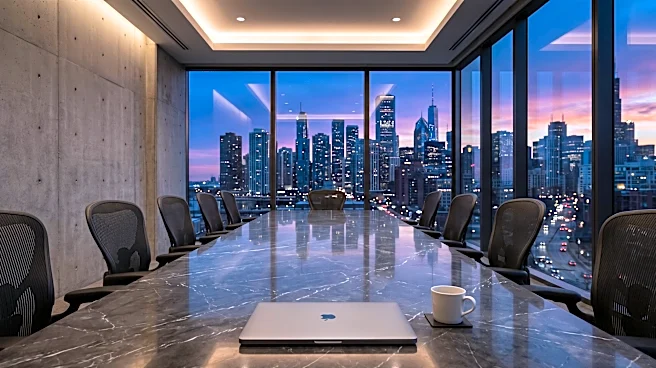
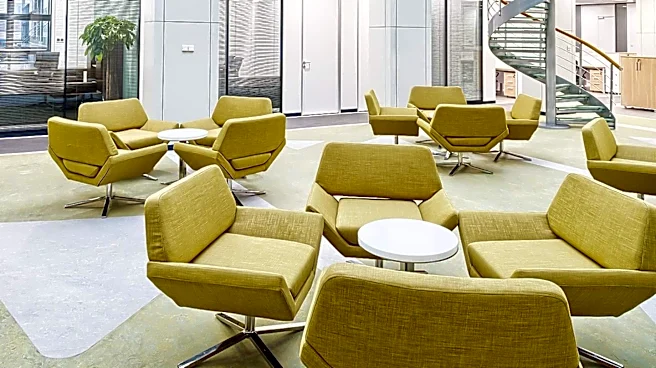
ecosystems. The project, which is based on regenerative principles, seeks to address widespread workplace stress, with statistics indicating that nearly one in three workers in Europe experience stress, depression, or anxiety related to their work environment. The research translates theoretical concepts into practical spatial solutions through a design proposal for an existing office in Refshaleøen. The project emphasizes five guiding principles for regenerative office design, offering a framework for creating spaces that support people, place, and long-term ecological well-being. These principles are intended to inform both architectural and interior design decisions, moving beyond conceptual ideas to concrete spatial applications. The design proposal incorporates flexible layouts, circular materials, natural elements, and sensory well-being across various spaces, including entrance areas, workstations, collaboration zones, meeting rooms, and meditation gardens. Each space is designed to cater to different user needs, from concentration and collaboration to community use and restoration, demonstrating how office environments can become more adaptable and connected to nature.
Why It's Important?
This project is important for U.S. businesses and the broader economy as it highlights a growing global trend towards integrating employee well-being and environmental sustainability into corporate infrastructure. With a significant portion of the workforce experiencing work-related stress, the adoption of regenerative design principles could lead to substantial improvements in employee health, productivity, and retention. For U.S. companies, investing in such office designs could translate into reduced healthcare costs, lower absenteeism, and a more engaged workforce. The emphasis on circular materials and natural elements also aligns with increasing corporate social responsibility (CSR) goals and environmental, social, and governance (ESG) criteria, which are becoming critical for investor relations and public perception. Furthermore, the project's focus on flexible layouts and adaptable spaces addresses the evolving nature of work, including hybrid models, making it relevant for companies seeking to future-proof their office environments. Businesses that embrace these principles stand to gain a competitive advantage in attracting and retaining top talent, while those that lag may face challenges in employee satisfaction and operational efficiency.
What's Next?
The Royal Danish Academy's project is set to conclude in 2026, at which point the detailed design proposal and the five guiding principles for regenerative office design will be fully developed and presented. The case study conducted at Refshaleøen will provide practical insights into the strengths and limitations of applying these principles in a real-world setting. Following the project's completion, it is anticipated that the findings and guidelines will be disseminated to architects, interior designers, and businesses globally, including in the U.S., to encourage broader adoption of regenerative office design. This could lead to new industry standards and certifications for well-being-focused and sustainable workplaces. Major stakeholders, including architectural firms, corporate real estate developers, and human resources departments, are likely to evaluate these guidelines for potential integration into their future projects and strategies. The success of this project could also spur further research into the long-term impacts of regenerative design on employee well-being and environmental sustainability, potentially influencing public policy related to workplace health and green building initiatives.
Beyond the Headlines
Beyond the immediate benefits of improved employee well-being and environmental sustainability, the Royal Danish Academy's project on regenerative office spaces signals a deeper shift in architectural philosophy. It moves beyond merely minimizing harm to actively seeking to restore and enhance both human and ecological systems. This approach challenges conventional notions of building design, which often prioritize cost-efficiency and aesthetics over holistic well-being. Ethically, it underscores a growing responsibility for corporations to create environments that nurture, rather than deplete, their human and natural resources. Culturally, it reflects a broader societal recognition of the interconnectedness between physical spaces, mental health, and ecological balance. The integration of natural elements and flexible layouts could also foster a more collaborative and creative work culture, breaking down traditional hierarchical structures often reinforced by rigid office designs. This paradigm shift could lead to a re-evaluation of urban planning, encouraging the development of 'living buildings' that contribute positively to their surroundings, ultimately fostering more resilient and harmonious communities.