








What's Happening?
Major U.S. retailers, including Home Depot, Walmart, Ulta, Lowe's, and Kroger, are facing increasing consumer backlash and scrutiny over their use of advanced anti-theft camera systems, specifically automated license plate readers (ALPRs) from Flock Safety.
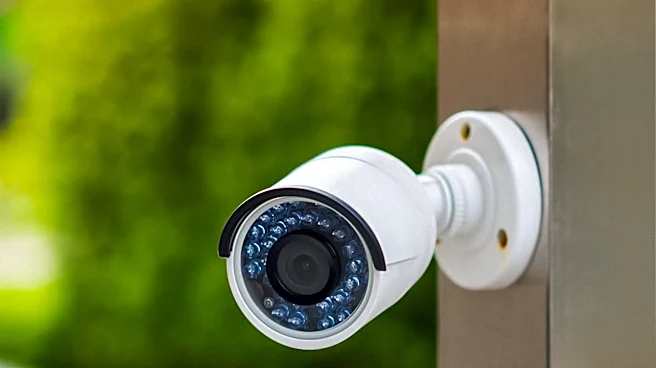
Auto expert Jay Beeber highlighted the distinction between traditional in-store security cameras, which primarily monitor for shoplifting, and Flock Safety's ALPRs. While in-store cameras typically review footage after an incident, ALPRs in parking lots record identifiable vehicle information, such as license plate numbers, make, model, and color, and store it in a large database. Critics argue that this extensive data collection constitutes mass surveillance, raising significant privacy concerns. An Ulta Beauty spokesperson stated that Flock cameras are deployed at fewer than 1% of their locations and are used to support criminal investigations, particularly organized retail theft. However, advocacy groups like Ultraviolet and Fight for the Future are actively campaigning against these partnerships, citing potential misuse of data and the normalization of AI surveillance.
Why It's Important?
The deployment of ALPR technology by major retailers has significant implications for consumer privacy and the balance between security measures and individual rights. While retailers argue these systems are crucial for combating rising retail theft, critics contend that the broad collection and retention of personal vehicle data without explicit consent or clear data retention policies infringe upon privacy. The controversy highlights a growing tension between corporate security interests and public concerns about surveillance. The potential for data misuse, as evidenced by reports of law enforcement officers inappropriately using Flock's system to track individuals, further fuels public distrust. This situation could lead to a shift in consumer behavior, with shoppers potentially avoiding stores that implement such technologies, thereby impacting retailers' brand image and sales. Moreover, the debate could prompt legislative action at state and local levels to regulate the use of ALPRs by private entities, similar to Florida's recent ban on ALPRs on state roads.
What's Next?
The ongoing consumer backlash is likely to intensify, with advocacy groups continuing their campaigns to pressure retailers to terminate contracts with Flock Safety. Shoppers are encouraged to contact corporate offices of these retailers to voice their concerns, potentially leading to policy changes regarding data usage and retention. Retailers may be compelled to re-evaluate their agreements with Flock Safety, potentially implementing stricter data retention limits or increasing transparency about how the collected data is used and shared. The legal and regulatory landscape surrounding ALPRs is also expected to evolve, with more cities and states potentially considering bans or stricter regulations on their deployment by both public and private entities. The outcome of these efforts could set precedents for how surveillance technologies are adopted and governed in commercial spaces across the U.S., influencing future technology implementations and consumer privacy expectations.
Beyond the Headlines
Beyond the immediate concerns of retail theft and privacy, the widespread adoption of ALPRs by private businesses raises deeper ethical and societal questions about the normalization of pervasive surveillance. The integration of such technologies into everyday commercial environments blurs the lines between public and private spaces, potentially eroding the expectation of anonymity in public. This trend could contribute to a 'surveillance society' where individuals are constantly tracked, leading to a chilling effect on personal freedoms and civil liberties. The debate also touches upon the broader implications of AI-powered surveillance, including potential biases in data collection and analysis, and the lack of accountability mechanisms for data misuse. The long-term impact could include a redefinition of privacy rights in the digital age and a societal reckoning with the trade-offs between security, convenience, and individual autonomy.