








What's Happening?
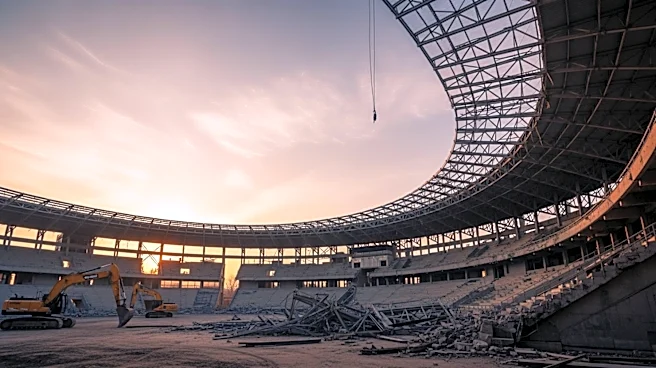
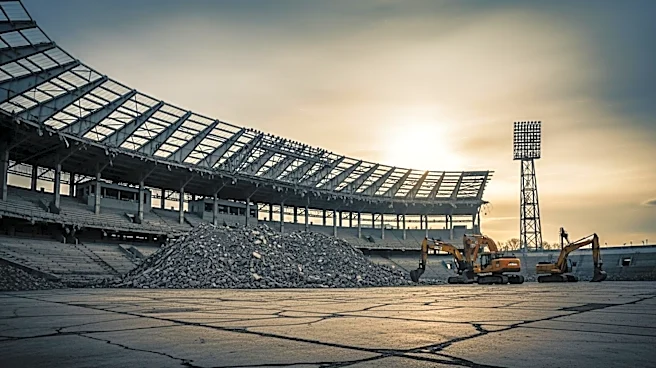
The demolition of the former Highmark Stadium, home to the Buffalo Bills, has commenced following the disconnection of its power on May 1. The process involves dismantling over 900,000 square feet of steel, concrete, and seating, and is expected to continue
until March 2027. The stadium, originally opened in 1973 as Rich Stadium, hosted Bills games for 53 seasons. The team will relocate to a new stadium across Abbott Road starting in 2026. The demolition marks the end of an era for the Bills and the beginning of a new chapter in their history.
Why It's Important?
The demolition of Highmark Stadium is significant as it represents a major transition for the Buffalo Bills and their fans. The move to a new stadium is expected to enhance the team's facilities and improve the fan experience. This change is part of a broader trend in the NFL, where teams are investing in modern stadiums to boost revenue and attract more fans. The demolition also impacts the local economy, as the construction of the new stadium and the redevelopment of the old site could create jobs and stimulate economic growth in the area.
What's Next?
The Bills will begin playing in the new Highmark Stadium in 2026, marking a new era for the team. The demolition of the old stadium will continue through March 2027, with potential redevelopment plans for the site. The transition may involve logistical challenges, including transportation and infrastructure adjustments. Fans and local businesses will need to adapt to the new stadium location and its impact on game day activities.
Beyond the Headlines
The demolition of Highmark Stadium highlights the evolving nature of sports infrastructure and the importance of modern facilities in professional sports. It reflects the ongoing investment in sports venues to enhance fan engagement and revenue generation. The transition also underscores the cultural significance of sports venues in local communities and the emotional impact of such changes on long-time fans.