
What's Happening?
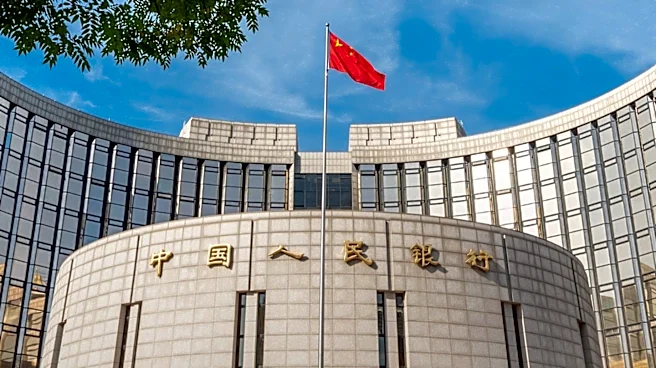
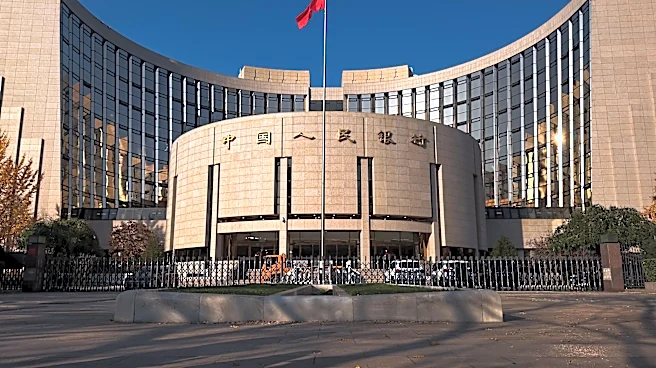
The People's Bank of China (PBOC) announced on November 24 that it will conduct 800 billion yuan (approximately $120.3 billion) of one-year Medium-term Lending Facility (MLF) operations on November 25.
This amount is a reduction from the 1 trillion yuan (approximately $150.3 billion) maturing this month, resulting in a net drain of 200 billion yuan (approximately $30.1 billion). This marks the second consecutive month of reduced MLF rollovers, matching October's reduction. Additionally, outright reverse repos across two tenors saw a net drain of 300 billion yuan (approximately $45.1 billion). Cumulatively, November's medium-term liquidity tools have drained a total of 500 billion yuan (approximately $75.2 billion) net, ending a four-month period of increased rollovers. Analysts suggest this move is a response to recently loose market liquidity, aiming to stabilize funding rates and manage market expectations regarding monetary policy.
Why It's Important?
This shift in the PBOC's liquidity management strategy is significant as it signals a move towards tightening monetary conditions after four months of increased liquidity injections. The net drain of 500 billion yuan indicates the central bank's intention to curb what it perceives as excessively loose market liquidity. This action could influence bond market yields, which have been declining due to expectations of looser liquidity. By reducing the MLF rollover and draining funds, the PBOC aims to prevent market speculation that its open market operation reforms are equivalent to rate cuts. This proactive management of liquidity can help maintain financial stability and guide market expectations, potentially impacting borrowing costs for businesses and overall economic activity in China.
What's Next?
The PBOC's continued approach to managing market liquidity will be closely watched. Future MLF operations and reverse repo tenders will indicate whether this net draining trend persists or if the central bank will adjust its stance based on evolving market conditions. Analysts will be looking for further signals from the PBOC regarding its monetary policy direction, especially in relation to funding rates and bond yields. The central bank's actions could lead to a recalibration of market expectations regarding future interest rate movements and overall liquidity levels. Businesses and investors will need to monitor these developments to anticipate potential impacts on credit availability and investment strategies.
Beyond the Headlines
The PBOC's decision to reduce liquidity injections reflects a delicate balancing act between supporting economic growth and preventing asset bubbles or excessive financial leverage. By curbing the downward momentum in funding rates, the central bank is attempting to manage the pace of financial market adjustments. This strategy also highlights the PBOC's commitment to guiding market expectations and preventing misinterpretations of its policy signals. The precedent of similar net drains during periods of loose market liquidity earlier in the year suggests a consistent approach to maintaining financial stability. This measured tightening could have broader implications for global financial markets, given China's economic influence, as it signals a more cautious stance on monetary easing.