







What's Happening?
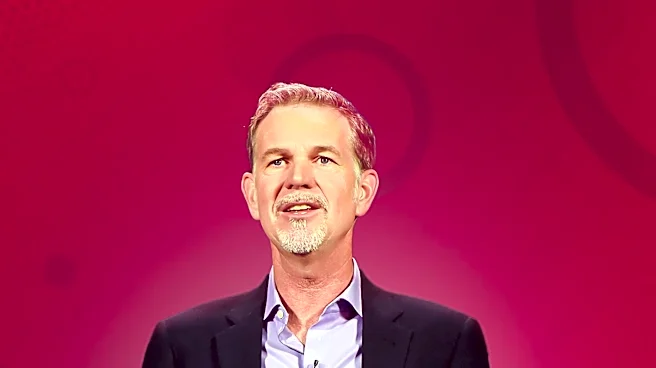
In 2000, Netflix co-founder Reed Hastings and a colleague traveled to Dallas to propose a deal to Blockbuster's then-CEO, John Antioco. The proposal involved Netflix managing Blockbuster's online brand, with Blockbuster integrating Netflix into its retail
operations, all under the Blockbuster name. The asking price for this deal was reportedly a small sum relative to Blockbuster's financial standing at the time. However, Antioco and his team declined the offer, as they did not perceive a subscription mail-order DVD service as a significant threat to their established store-based rental giant. At that point, Netflix was a small and unprofitable company. Blockbuster's decision was influenced by its reliance on late fees, which constituted a substantial portion of its revenue, estimated at 15 to 20 percent. This revenue model made Blockbuster reluctant to adopt a service like Netflix, which offered no late fees.
Why It's Important?
This historical interaction highlights a critical missed opportunity for Blockbuster and a pivotal moment for Netflix's independent growth. Blockbuster's failure to recognize the disruptive potential of Netflix's model, largely due to its dependence on late fees, ultimately contributed to its decline. The company's internal financial structure, which heavily relied on penalties, made it difficult to adapt to a customer-friendly, no-late-fee model. This case study is often cited in business schools as an example of how established companies can fail to innovate and respond to emerging technologies, especially when their existing revenue streams create a disincentive for change. The decision allowed Netflix to develop its subscription service without direct competition from the market leader, paving the way for its eventual transformation into a global streaming giant.
What's Next?
While the immediate 'what's next' for this specific historical event has long passed, its implications continue to resonate in business strategy. The Blockbuster-Netflix story serves as a cautionary tale for companies across various industries, emphasizing the importance of foresight and adaptability in the face of technological disruption. Businesses today are constantly evaluating their models to avoid similar pitfalls, particularly with the rapid evolution of digital services and consumer expectations. The ongoing shift towards subscription-based models and the decline of traditional retail continue to reflect the lessons learned from Blockbuster's experience, prompting companies to proactively embrace change rather than clinging to outdated, albeit profitable, practices.
Beyond the Headlines
The Blockbuster-Netflix narrative extends beyond a simple case of a large company missing new technology. It underscores the deeper organizational and cultural challenges that can hinder innovation. Blockbuster's management, particularly under pressure from activist investors, struggled to pivot away from its lucrative late-fee model, even when its CEO, John Antioco, later attempted to introduce an online rental service and eliminate late fees. This internal resistance and the short-term focus on quarterly profits over long-term strategic adaptation ultimately sealed Blockbuster's fate. The story highlights how structural dependencies, such as reliance on specific revenue streams or a vast physical footprint, can become liabilities when market dynamics shift, making it difficult for even well-established companies to respond effectively to disruptive forces.