



What's Happening?
Motional, the autonomous-driving company backed by Hyundai Motor Group, has successfully completed a series of safety reviews in preparation for the commercial launch of its driverless robotaxi service in Las Vegas. The reviews, announced on November
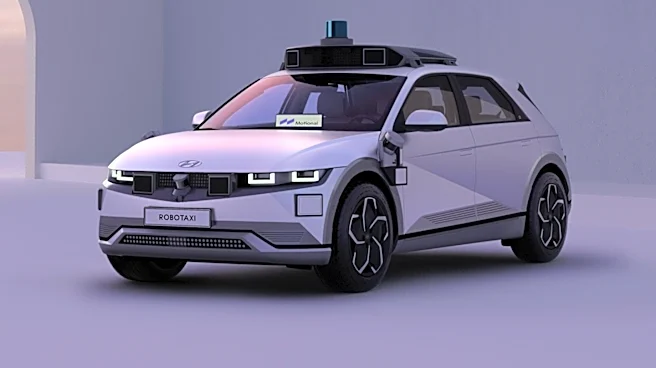
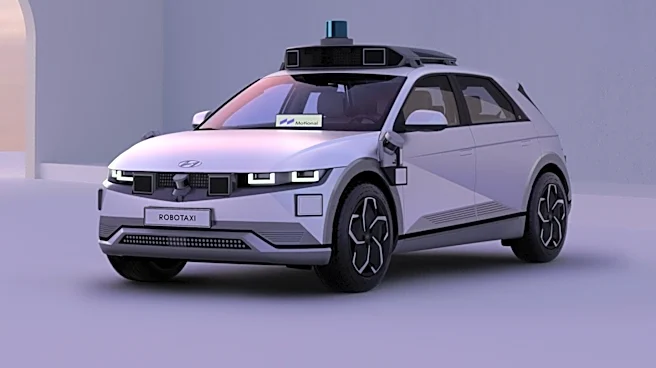
19, 2026, involved independent safety organization TÜV SÜD, Hyundai Motor Group, and ride-hailing partner Uber. Each entity assessed different aspects of the planned driverless operation, including the safety framework, vehicle engineering, and passenger service requirements. TÜV SÜD confirmed that Motional's safety case structure aligns with industry best practices, providing an independent assessment of the company's approach. Hyundai Motor Group reviewed the integration of the IONIQ 5 robotaxi's physical systems with Motional's autonomous-driving technology, emphasizing that the vehicle was specifically developed for driverless operation. Uber focused on its Safety Guidelines for Autonomous Mobility and Delivery Providers, including organizational, vehicle, and operational safety, and conducted end-to-end testing for passenger experience and app integration. These assessments are crucial steps toward removing human safety drivers from passenger operations.
Why It's Important?
The completion of these safety reviews marks a significant milestone for the autonomous vehicle industry in the U.S., particularly for the commercial deployment of driverless robotaxis. This development brings Hyundai Motor Group's autonomous-driving ambitions closer to real-world passenger transportation, potentially transforming urban mobility. For consumers in Las Vegas, it could introduce a new, potentially more efficient and accessible form of transportation through Uber's platform. The rigorous independent assessments by TÜV SÜD and the collaborative reviews with Hyundai and Uber aim to build public trust in autonomous technology, which is critical for widespread adoption. Success in Las Vegas could pave the way for similar services in other U.S. cities, impacting traditional taxi and ride-sharing markets. This also highlights the growing competition and innovation in the autonomous vehicle sector, with companies striving to be the first to offer safe and reliable driverless services.
What's Next?
Following the successful completion of these safety reviews, Motional is targeting a commercial launch of its driverless robotaxi service in Las Vegas. The service is expected to operate through Uber's platform, integrating the driverless vehicles into Uber's existing ride-hailing network. While these reviews represent a significant readiness milestone, they do not eliminate the need for ongoing testing and operational oversight. The company will likely continue to monitor and refine its systems as it scales up its commercial operations. The performance and public reception of the Las Vegas service will be closely watched by regulators, competitors, and potential customers, influencing the pace and scope of future autonomous vehicle deployments across the U.S. Further regulatory approvals and public acceptance will be key factors in the expansion of Motional's driverless technology.
Beyond the Headlines
The successful completion of these safety reviews by Motional and its partners underscores a broader shift in the transportation landscape, moving towards a future where autonomous vehicles play a central role. This development raises important ethical and legal considerations regarding liability in the event of accidents, the impact on employment for human drivers, and the regulatory frameworks needed to govern such advanced technologies. The emphasis on a vehicle designed specifically for driverless operation, rather than a retrofitted car, highlights a trend towards purpose-built autonomous systems, which could lead to more robust and safer designs. Furthermore, the collaboration between an automotive giant (Hyundai), an autonomous tech company (Motional), and a ride-hailing platform (Uber) exemplifies the complex partnerships required to bring such innovative services to market, potentially setting a precedent for future industry collaborations.