







What's Happening?
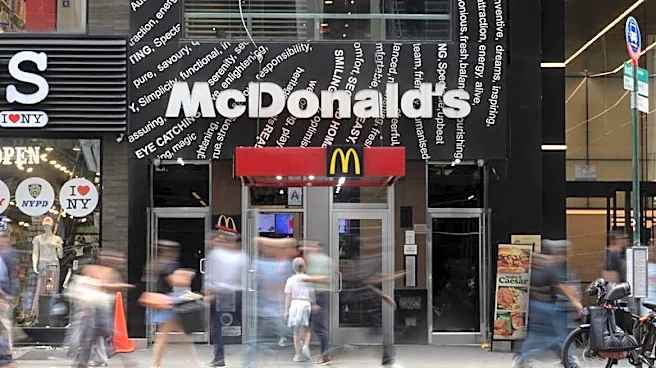
Darcy Gilbert, Vice President of Global Food and Beverage Sourcing at McDonald’s, oversees a vast supply chain supporting over 46,000 restaurants in more than 100 markets. She highlights the increasing complexity of the operating environment, marked by
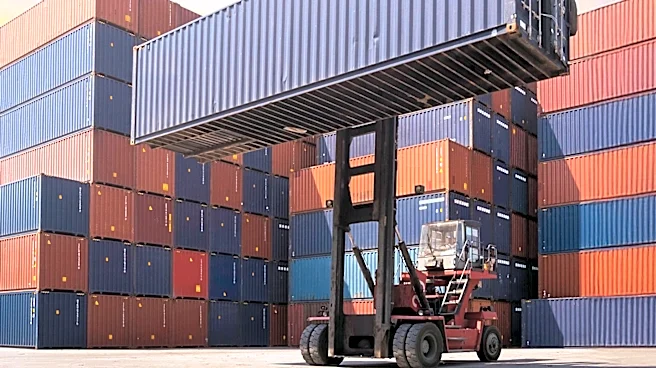
commodity volatility, extreme weather, geopolitical conflicts, and shifting trade policies. Gilbert emphasizes a 'three-legged stool' approach, balancing the needs of the company, franchisees, and suppliers to ensure food safety, quality, predictable pricing, and assured supply. McDonald's is shifting from reactive crisis management to proactive anticipation, leveraging digital tools and artificial intelligence to make smarter decisions and strengthen supply chain resiliency. The ongoing conflict in the Middle East, for instance, has prompted a reassessment of logistics and trade routes.
Why It's Important?
McDonald's approach to supply chain management is critical for the U.S. business landscape, as it demonstrates how a major global corporation navigates complex challenges that affect industries worldwide. The company's focus on proactive risk anticipation, digital transformation, and sustainable sourcing sets a precedent for other businesses. For U.S. consumers, this translates to consistent access to products and stable pricing, despite global disruptions. For the U.S. economy, McDonald's ability to maintain a robust supply chain supports numerous domestic suppliers and contributes to overall economic stability. The emphasis on farm-level resiliency and sustainable sourcing also addresses growing concerns about environmental impact and the long-term viability of agricultural practices, which are vital for the nation's food security.
What's Next?
McDonald's will continue to prioritize assuring supply in critical categories, delivering competitive and predictable pricing, and embedding sustainable sourcing deeper into its commercial strategy for 2027. This involves challenging the status quo, anticipating risks earlier, and working more effectively with data and industry partners. The company plans to leverage digital tools and AI for scenario planning, enabling it to model potential futures and evaluate strategic options proactively. This forward-looking approach suggests a continuous evolution in how large corporations manage their global supply chains, with a greater emphasis on agility, flexibility, and collaborative problem-solving across the entire ecosystem, from farms to restaurants.
Beyond the Headlines
McDonald's strategic shift towards proactive supply chain management and digital integration reflects a broader industry trend where resilience is becoming a core competitive advantage. The 'three-legged stool' philosophy underscores the ethical dimension of business, emphasizing the importance of equitable relationships with franchisees and suppliers for long-term success. This approach moves beyond mere cost optimization to consider the holistic health of the supply chain ecosystem. The integration of sustainable sourcing into commercial strategy also highlights a growing corporate responsibility to address environmental and social impacts at the foundational level of production. This comprehensive view of supply chain management could influence future business models, promoting a more integrated and responsible approach to global commerce.