


What's Happening?
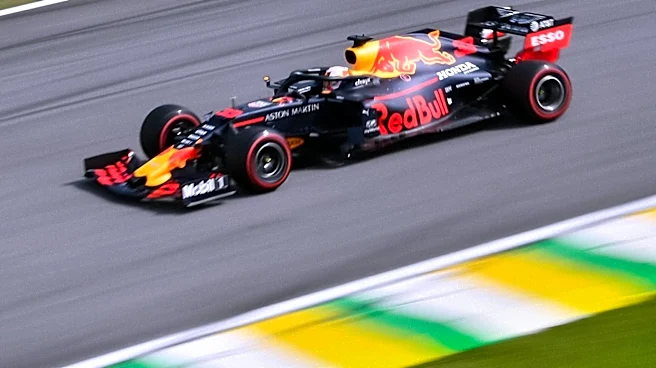
The FIA has concluded its third Additional Development and Upgrade Opportunities (ADUO) review for 2026, covering races 12 to 18, and has decided not to grant Red Bull-Ford any further power unit development allowances for the 2027 Formula 1 season. This
decision means Red Bull-Ford will enter 2027 without additional homologation opportunities, despite being identified as the benchmark for internal combustion engine (ICE) performance earlier this year. The ADUO system, introduced for 2026, allows manufacturers whose ICE performance is at least two percent below the leading engine to undertake additional development. Manufacturers between two and four percent behind qualify for one additional homologation in the current season and another the following year, along with increased cost cap and dynamometer testing allowances. Those at least four percent behind qualify for two additional homologations in each season. Audi, Ferrari, and Honda were all more than four percent behind, qualifying for two additional homologations in each season, while Mercedes was in the two-to-four percent category, earning one additional upgrade for 2026 and another for 2027. This marks the second consecutive review where Red Bull received no additional allowances, leaving their existing allocations unchanged for 2027. FIA single-seater director Nikolas Tombazis defended the assessment process, stating confidence in its conclusions and acknowledging ongoing discussions with manufacturers for system refinements.
Why It's Important?
This decision by the FIA significantly impacts Red Bull-Ford's competitive landscape for the 2027 Formula 1 season. By denying them additional power unit development allowances, the FIA is effectively leveling the playing field, preventing a single team from gaining an overwhelming advantage through continuous upgrades. This could lead to a more competitive and unpredictable racing environment, benefiting the sport's overall appeal and fan engagement. For Red Bull-Ford, this means they must optimize their current power unit design and development strategies without the flexibility of extra homologations, potentially putting them at a disadvantage if rival manufacturers make significant strides with their allowed upgrades. Conversely, manufacturers like Audi, Ferrari, and Honda, who received additional allowances, have a clearer path to improving their ICE performance, which could shift the balance of power in the upcoming seasons. The FIA's commitment to refining the ADUO system also indicates a proactive approach to maintaining fairness and preventing dominance, which is crucial for the long-term health and excitement of Formula 1.
What's Next?
Red Bull-Ford will proceed with their existing power unit development plan for the 2027 season without the benefit of additional homologations. This will necessitate a strategic focus on maximizing the performance of their current engine design and potentially exploring other areas of car development to maintain competitiveness. Rival manufacturers, particularly those granted additional allowances, will likely leverage these opportunities to enhance their power units, aiming to close the performance gap or even surpass Red Bull-Ford. The FIA will continue its ADUO reviews, with the next assessment covering the opening six rounds of the 2027 season, from Bahrain to Miami. Discussions regarding refinements to the ADUO methodology will also persist, indicating a potential evolution of the system in future seasons to ensure its effectiveness and relevance. The performance of all teams in the initial races of 2027 will be closely watched to see the immediate impact of these development restrictions and allowances.
Beyond the Headlines
The FIA's decision highlights a broader regulatory philosophy within Formula 1 aimed at fostering competitive balance and preventing prolonged periods of single-team dominance. While Red Bull-Ford's initial benchmark status for ICE performance was surprising, especially given Mercedes' historical dominance and Red Bull's relative newness as an engine manufacturer, the denial of further allowances underscores the FIA's commitment to a dynamic and challenging competitive environment. This approach could lead to increased innovation across all teams as they seek alternative avenues for performance gains beyond direct power unit upgrades. It also raises questions about the long-term implications of such stringent development regulations on technological advancement within the sport. The ongoing dialogue between the FIA, manufacturers, and teams suggests a collaborative effort to fine-tune these rules, balancing the need for competition with the desire for technological progress. This regulatory framework could serve as a model for other high-tech sports seeking to maintain competitive parity.