



What's Happening?
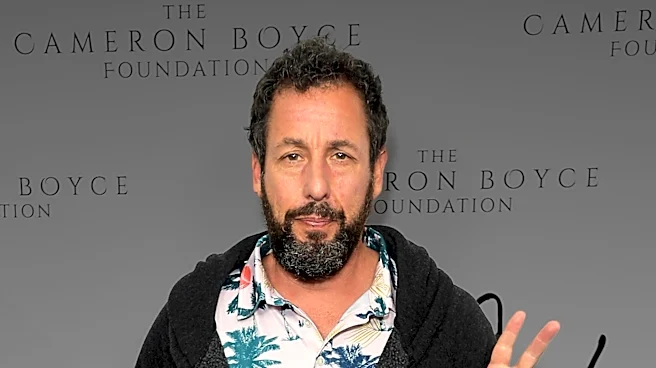
Actor and comedian Adam Sandler has consistently maintained a private stance regarding his political affiliation, leading to ongoing speculation among the public and in celebrity commentary. Despite his high public profile, Sandler has not publicly declared
his party registration, voting history, or made definitive statements on policy that would clearly align him with a specific political party. This privacy is a common practice among many Hollywood figures who aim to avoid alienating broad fan bases. The speculation often arises from his professional relationships, such as his collaborations with director Dennis Dugan, a known Republican, or from casual observations like being photographed at the home of a Republican-leaning friend. However, these associations do not provide concrete evidence of Sandler's personal political identity. His films, which often target a wide, middle-American demographic, typically focus on themes of family, nostalgia, and anti-establishment humor, rather than overt political messaging, further contributing to his apolitical public image.
Why It's Important?
The persistent public curiosity about Adam Sandler's political leanings highlights a broader societal tendency to categorize public figures into defined political boxes. This phenomenon is significant because it often reduces complex individuals to binary identifiers, overlooking the possibility of independent voters or moderates who do not fit established narratives. For entertainers whose careers depend on broad appeal, maintaining political neutrality or a vague public stance can be a strategic professional decision to avoid alienating segments of their audience. This approach allows them to leverage their fame for entertainment and revenue generation without attaching a definitive political label. The lack of verifiable information, such as public voter registration or campaign finance records, underscores the challenges in accurately determining the political identity of private citizens, even those in the public eye. This situation reflects the tension between public desire for transparency from celebrities and an individual's right to privacy regarding personal beliefs.
What's Next?
Given Adam Sandler's consistent pattern of maintaining privacy regarding his political views, it is highly probable that he will continue to operate in an apolitical zone. Unless he chooses to make a public declaration or his voter registration becomes a matter of public record, the question of his political affiliation is likely to remain a subject of speculation rather than verifiable fact. Major stakeholders, including political groups and media outlets, may continue to attempt to infer his leanings based on indirect associations or the themes in his work, but these efforts are unlikely to yield definitive answers. The entertainment industry, in general, may continue to see more public figures adopt similar strategies of political neutrality to protect their broad appeal and avoid partisan backlash. This trend suggests a continued emphasis on personal privacy in an era of intense public scrutiny.
Beyond the Headlines
The ongoing speculation surrounding Adam Sandler's political affiliation delves into deeper implications concerning celebrity culture, privacy, and the public's relationship with influential figures. It highlights the ethical dimension of public scrutiny, where the desire to understand the private lives of the famous often clashes with an individual's right to maintain personal boundaries. This situation also reflects how the media and public often seek to project political identities onto celebrities, sometimes based on tenuous connections or interpretations of their work, rather than concrete evidence. The 'apolitical zone' Sandler occupies can be seen as a form of strategic self-preservation in an industry where political alignment can significantly impact career trajectory and public perception. This dynamic underscores the evolving nature of celebrity influence, where maintaining a degree of mystery about personal beliefs can be a deliberate choice to foster broader appeal and avoid the polarizing effects of partisan politics.