







What's Happening?
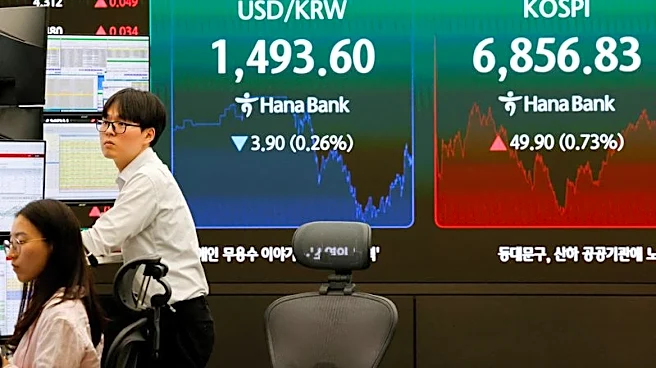
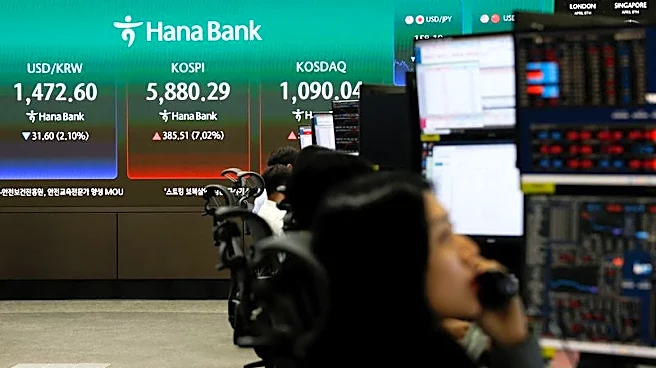
In response to the recent market downturn, South Korea has introduced new regulations on single-stock leveraged exchange-traded funds (ETFs) linked to major companies like Samsung Electronics and SK hynix. The government has capped individual investors'
holdings of these ETFs at 20% of their total investment portfolio. Additionally, measures such as increased trading costs and mandatory trading simulations for investors are being implemented. These actions are part of a broader effort to stabilize the market and address the volatility caused by leveraged financial products.
Why It's Important?
The new regulations reflect the government's commitment to mitigating market volatility and protecting retail investors from high-risk financial products. By capping the proportion of leveraged ETFs in retail portfolios, the authorities aim to reduce the potential for significant financial losses among individual investors. These measures could help restore investor confidence and stabilize the market, which is crucial for maintaining economic growth and financial stability. The regulatory changes also highlight the need for ongoing oversight of financial products to ensure they do not pose undue risks to investors and the broader market.
What's Next?
The implementation of these regulations may lead to a period of adjustment for investors and financial institutions as they adapt to the new rules. The government may continue to monitor the market closely and introduce additional measures if necessary to ensure stability. Financial institutions might also enhance their investor education programs to help individuals better understand the risks associated with leveraged financial products. The ongoing market conditions could prompt further regulatory scrutiny and potentially lead to additional reforms aimed at protecting investors and maintaining market integrity.