







What's Happening?
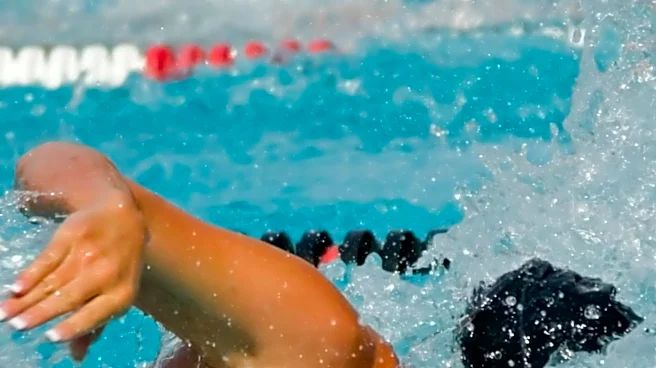
Triathlon coaches are highlighting the importance of purposeful swim training over simply accumulating distance to improve performance. According to Coach Ray of Qwik Kiwi Coaching, effective swim training for triathletes involves understanding current
ability, developing efficient freestyle strokes, and maintaining swimming speed as fatigue sets in. Three specific workouts are recommended: a 1,500m time trial to assess current performance, a 4 x 400m session utilizing paddles and pull buoys to explore strength, technique, and efficiency, and a 15 x 100m interval session to develop consistent pacing. These workouts are designed to provide a comprehensive approach to improving triathlon swimming by focusing on testing, strength-focused swimming, and endurance development. The time trial serves as an objective measure, while equipment-based training offers feedback on technique, and interval training builds consistent pacing under fatigue.
Why It's Important?
This shift in training philosophy is crucial for U.S. triathletes and the broader endurance sports community. By moving beyond mere distance accumulation, athletes can achieve more significant and sustainable improvements in their swim performance. The emphasis on objective measurement through time trials allows athletes to track progress and identify specific areas for improvement, such as pacing, endurance, or technique under fatigue. The use of equipment like paddles and pull buoys helps athletes understand and refine their stroke mechanics, which can lead to greater efficiency and reduced injury risk. Consistent pacing developed through interval training is vital for race day, ensuring athletes can maintain their speed throughout the swim leg of a triathlon. This approach can lead to better race outcomes, increased athlete satisfaction, and potentially a higher standard of performance in U.S. triathlon events.
What's Next?
Triathletes are encouraged to integrate these purposeful training methods into their routines. This involves not just performing the workouts but also meticulously recording performance details, such as total times, average pace, intermediate splits, and how stroke and breathing felt. Coaches will likely continue to advocate for and refine these structured training programs, potentially leading to more widespread adoption within U.S. triathlon clubs and training groups. The focus will be on educating athletes about the 'why' behind each session, ensuring they understand the specific objectives and how each workout contributes to overall improvement. This could also lead to the development of more sophisticated training tools and analytics to help athletes track and interpret their performance data more effectively.
Beyond the Headlines
The emphasis on purposeful training reflects a broader trend in sports science towards data-driven and individualized approaches to athlete development. This methodology moves beyond traditional volume-based training, highlighting the importance of quality over quantity. For U.S. athletes, this means a more intelligent and potentially less injury-prone path to improvement. It also underscores the role of coaching in guiding athletes to understand their bodies and performance metrics. The principles of assessing current ability, refining technique, and building consistent performance are transferable to other endurance sports, suggesting a potential paradigm shift in how athletes across various disciplines approach their training. This could foster a culture of continuous learning and adaptation within the athletic community, promoting long-term athletic development and success.