

What's Happening?
Gallery 19C in Westlake, Texas, is hosting a free exhibit titled 'The French Fashionista: Dressing the Women of Nineteenth-Century Paris,' running from November 12 through December 31. The exhibition features significant artworks, including Alfred Stevens’
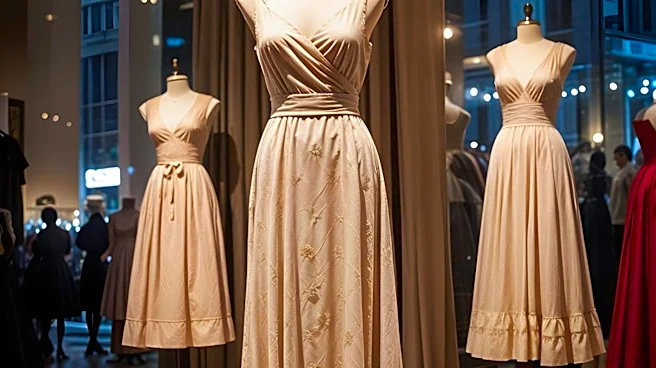
'Le Salon du Peintre,' which has not been publicly displayed since 1999. The exhibit aims to treat 19th-century fashion elements like crinolines, bustles, and lifted hems as fine art, showcasing how women in Paris used clothing to navigate social status and public life. Gallery owner Eric Weider and director Polly Sartori emphasize the historical and cultural significance of these pieces, drawing parallels between 19th-century Parisian society and contemporary North Texas in terms of rapid change and self-definition through fashion.
Why It's Important?
This exhibit is important for several reasons. It brings a high level of cultural and historical art to North Texas, making it accessible to a broader audience outside major metropolitan art centers. By presenting fashion as a form of art and a tool for social navigation, the exhibit offers a unique perspective on women's history and societal norms of the 19th century. For the U.S. art community, it highlights the growing trend of regional galleries hosting significant international works, potentially decentralizing art appreciation. Furthermore, the exhibit's focus on how fashion reflects and influences identity resonates with contemporary discussions about self-expression and public image, making historical context relevant to modern audiences and potentially inspiring future fashion and art trends.
What's Next?
The exhibit's run through December 31 provides a limited window for public engagement. Its success could encourage Gallery 19C and similar regional institutions to host more specialized historical and cultural exhibitions, potentially attracting new patrons and fostering local art education. The organizers hope to spark interest in young minds, suggesting that the exhibit could influence future generations of artists, historians, and fashion enthusiasts. The connection drawn between 19th-century Parisian fashion and the contemporary cultural landscape of North Texas might also inspire local artists and designers to explore historical influences in their work, creating a dialogue between past and present aesthetics.
Beyond the Headlines
The exhibit delves into the deeper implications of fashion as a powerful form of non-verbal communication and social commentary. It illustrates how clothing was not merely decorative but a strategic tool for women to assert agency, convey status, and even challenge societal expectations in a highly scrutinized environment. The tension between public and private personas, as depicted in the artworks, highlights the enduring human experience of crafting an identity through appearance. The historical link between French fashion and Texas cotton also reveals the interconnectedness of global economies and cultural exchanges, demonstrating how local resources can fuel international trends. This exploration of fashion's ethical, legal, and cultural dimensions offers a rich understanding of its role in shaping individual and collective identities across centuries.