



What's Happening?
The European Union has imposed tariffs of up to 45% on Chinese-made electric vehicles (EVs), a move that significantly alters the economics of importing these cars into the bloc. This high tariff ceiling is pushing Chinese manufacturers to consider alternatives
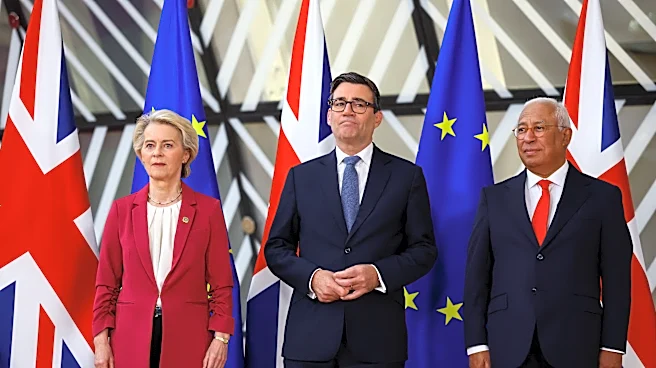
such as building production facilities in Europe, shipping kits for local assembly, or focusing on markets outside the EU, including the UK. This development coincides with ongoing talks for a proposed UK-EU reset, where new 'Made in Europe' requirements are being drafted. These rules would mandate companies to use a specified share of European-made components to qualify for EU subsidies or contracts, and as currently drafted, products made in the UK would not count. This exclusion creates a challenge for British factories and carmakers selling into the EU, as their components would fail the content test. The EU is also curbing imports of hybrid vehicles, closing a potential workaround for manufacturers facing EV tariffs.
Why It's Important?
These EU tariffs and local content rules have profound implications for the automotive industry, trade relations between the UK and the EU, and global supply chains. For Chinese EV manufacturers, the high tariffs necessitate a strategic re-evaluation of their European market entry, potentially leading to increased investment in European manufacturing facilities or a shift in export focus. For the UK, the exclusion from 'Made in Europe' rules complicates its efforts to forge closer economic ties with the EU post-Brexit. British carmakers and component suppliers face risks as their products may no longer qualify for EU subsidies or contracts, potentially forcing them to relocate production or lose market share. The situation also risks a confrontation with Beijing, which could affect Chinese investment in the UK, as Chinese automakers and battery makers have viewed Britain as a potential base for reaching European buyers. British drivers may also experience narrower choices and higher prices for EVs due to these tariffs.
What's Next?
The immediate future will likely see intense negotiations between the UK and the EU regarding the 'Made in Europe' rules, particularly the UK's request for its products to qualify as European-made. The outcome of these talks will determine the extent to which British manufacturers can participate in the EU market and access subsidies. London faces a critical decision on whether to align its own China policy with the EU's, which could involve imposing tariffs on Chinese-built EVs. Such a move would protect domestic producers and satisfy Brussels but could also raise prices for British consumers and invite retaliation from Beijing. Chinese manufacturers will continue to assess their investment strategies, potentially accelerating plans to establish production within the EU or exploring new markets. The final content percentage required by the 'Made in Europe' rules is also subject to change during negotiations, which will further shape supply chain decisions for automakers and battery producers.
Beyond the Headlines
The EU's aggressive stance on Chinese EVs and its 'Made in Europe' initiative signal a broader trend towards protectionism and regionalization in global trade, particularly in strategic industries like electric vehicles and batteries. This move reflects a desire to bolster European manufacturing capabilities, reduce reliance on foreign supply chains, and counter perceived unfair competition. The exclusion of UK-made products from the 'Made in Europe' definition highlights the ongoing economic ramifications of Brexit, forcing the UK to navigate complex trade-offs between aligning with its largest trading partner and maintaining independent trade policies. This situation could lead to a fragmentation of global automotive supply chains, with companies increasingly needing to establish regional production hubs to circumvent tariffs and meet local content requirements. Furthermore, the potential for a trade confrontation with China underscores the geopolitical dimensions of economic policy, where trade measures are used as tools to exert influence and protect national interests, potentially leading to retaliatory actions and increased global trade tensions.