





What's Happening?
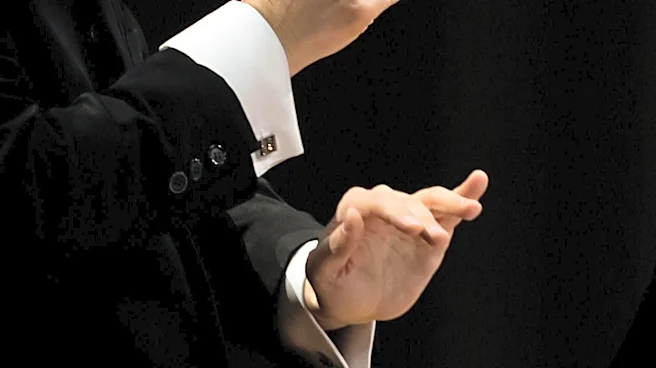
The role of conductors in orchestral music is examined, highlighting the dual perceptions of conductors as either essential leaders or unnecessary figures. Conducting is described as a mysterious art that involves guiding an orchestra to perform cohesively.
While orchestras can function without a conductor, an exceptional conductor can enhance the ensemble's performance by creating an electric synergy among musicians. The article discusses the historical development of conducting as a profession, emerging in the 19th century due to the increasing size and complexity of orchestras.
Why It's Important?
Understanding the role of conductors sheds light on the dynamics of orchestral performances and the collaborative nature of music-making. Conductors play a crucial role in interpreting musical scores and bringing out the best in musicians, impacting the quality of performances. This exploration of conducting also touches on broader themes of leadership, trust, and collaboration, relevant to various fields beyond music. The discussion highlights the balance between individual artistry and collective performance, offering insights into the cultural and artistic significance of orchestras.
Beyond the Headlines
The article delves into the cultural and historical context of conducting, reflecting on how the profession has evolved alongside technological and musical advancements. It also addresses the power dynamics within orchestras, where conductors often hold significant influence and are perceived as authoritative figures. This exploration raises questions about the balance of power and the importance of mutual respect and collaboration in achieving artistic excellence. The piece invites readers to consider the broader implications of leadership and teamwork in creative and professional settings.