






What's Happening?
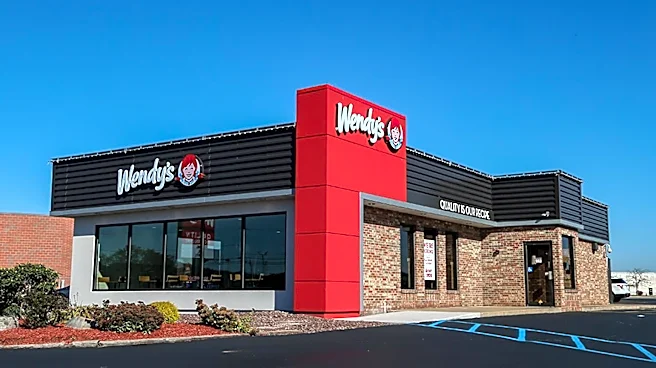
An operator of 314 Wendy's restaurant locations across the United States has filed for bankruptcy protection. The franchisee announced its intention to keep all restaurants operational and continue paying employees while it pursues a court-supervised
restructuring. This move comes as the Dublin, Ohio-based Wendy's chain has reportedly been facing challenges for several years, including issues with outdated stores, high beef prices, and intense competition within the fast-food industry. The filing indicates a strategic effort by the franchisee to reorganize its financial obligations and operations under legal protection, aiming to stabilize its business and address underlying economic pressures. The specific details of the restructuring plan and the timeline for its implementation are expected to unfold as the bankruptcy proceedings advance.
Why It's Important?
This bankruptcy filing by a significant Wendy's franchisee highlights broader economic pressures impacting the U.S. restaurant and fast-food sectors. The mention of high beef prices points to inflationary pressures on commodity costs, which can significantly erode profit margins for businesses in the food service industry. Outdated stores suggest a need for substantial capital investment in renovations and modernization to remain competitive, a challenge for many established chains. Stiff competition further underscores the saturated nature of the fast-food market, where companies constantly vie for consumer attention and loyalty through pricing, menu innovation, and service quality. This situation could lead to job losses if restructuring efforts are unsuccessful, or it could result in store closures, impacting local economies and employment. For Wendy's as a brand, a large-scale franchisee bankruptcy could affect its overall market perception and operational consistency, potentially prompting the corporate entity to re-evaluate its franchise model or offer additional support to struggling operators.
What's Next?
The franchisee will proceed with a court-supervised restructuring process, which typically involves negotiating with creditors to reorganize debt, potentially selling off assets, or seeking new financing. The immediate goal is to maintain business continuity, keeping all 314 Wendy's locations open and ensuring employees continue to be paid. The success of this restructuring will depend on various factors, including the ability to secure favorable terms with creditors, implement operational efficiencies, and adapt to market demands. Wendy's corporate entity may also play a role, potentially offering support or guidance to help the franchisee navigate the bankruptcy process and emerge stronger. There could be a period of uncertainty for employees, suppliers, and customers as the restructuring unfolds. The outcome of this bankruptcy could also influence other franchisees in the industry, prompting them to assess their own financial health and operational strategies in response to similar market challenges.
Beyond the Headlines
This bankruptcy filing reflects a deeper trend within the U.S. economy where established businesses, particularly in the consumer-facing sectors, are grappling with a confluence of challenges. Beyond the immediate issues of high beef prices and competition, the fast-food industry is also navigating evolving consumer preferences, including a growing demand for healthier options and more sustainable practices. The need for store modernization points to the significant capital expenditure required to keep pace with technological advancements and changing customer expectations for dining experiences. This situation could accelerate consolidation within the franchise model, where smaller or less efficient operators are absorbed by larger, more financially robust entities. It also underscores the delicate balance between corporate brand standards and franchisee autonomy, as corporate entities seek to maintain brand image while franchisees manage local operational costs and market dynamics. The long-term implications could include a shift in the fast-food landscape, with a greater emphasis on efficiency, technological integration, and a more resilient supply chain to mitigate future economic shocks.