





What's Happening?
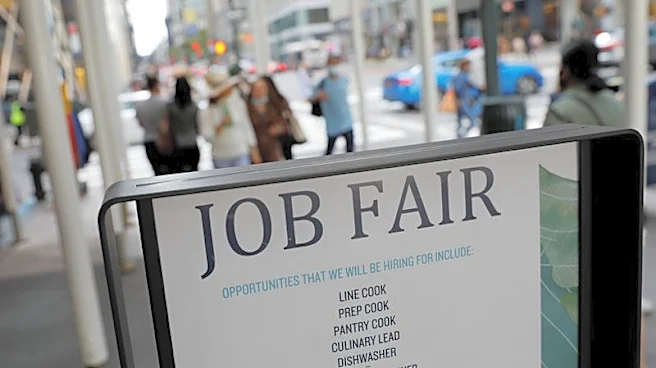
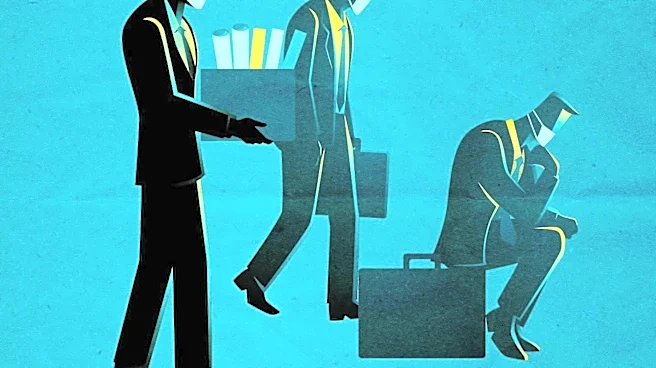
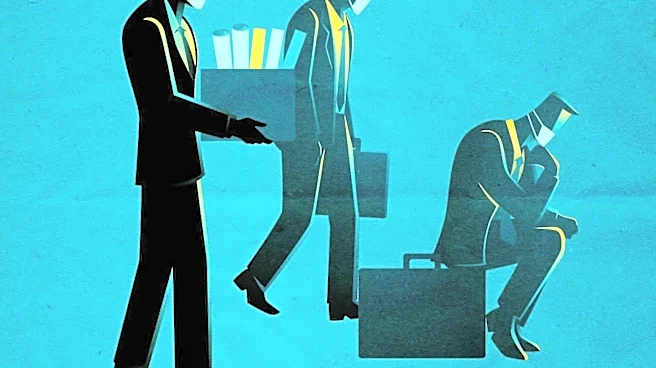
The U.S. economy experienced a loss of 23,000 jobs in July, as reported by the Bureau of Labor Statistics. This figure is significantly lower than analysts' expectations and follows a trend of downward revisions for job growth in May and June. The unemployment
rate decreased slightly to 4.1% from 4.2% in June, but this was attributed to a decline in the number of people actively seeking employment. The labor force participation rate also fell to 61.4%, marking the lowest level since February 2021. Health care was the only sector to show notable job gains, adding 22,000 positions, while local government education and retail trade saw significant job losses.
Why It's Important?
The job losses in July highlight ongoing challenges in the U.S. labor market, which could have broader implications for economic policy and consumer confidence. The decrease in labor force participation suggests that more individuals are leaving the workforce, potentially due to discouragement over job prospects. This trend could impact economic growth and influence Federal Reserve decisions on interest rates, as policymakers balance concerns over inflation with a weakening labor market. The report also underscores the uneven recovery across different sectors, with health care showing resilience while other industries struggle.
What's Next?
The Federal Reserve will closely monitor upcoming economic data, including the August jobs report and inflation figures, to inform its next interest rate decision in September. The central bank faces a complex situation, as it must address persistent inflation while supporting a labor market that shows signs of weakening. Market expectations for the Fed's next move are mixed, with some anticipating a pause in rate hikes. The outcome will depend on whether inflationary pressures ease and if the labor market shows signs of recovery in the coming months.