





What's Happening?
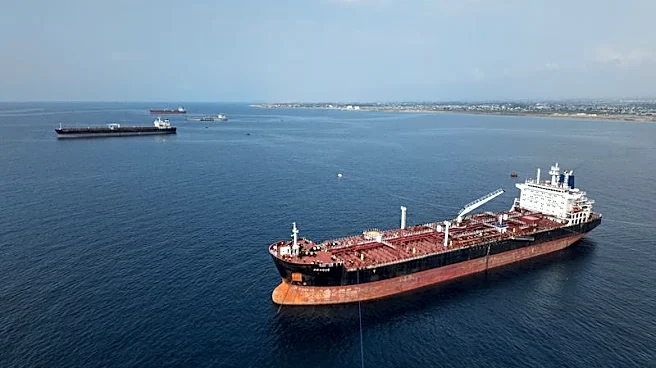
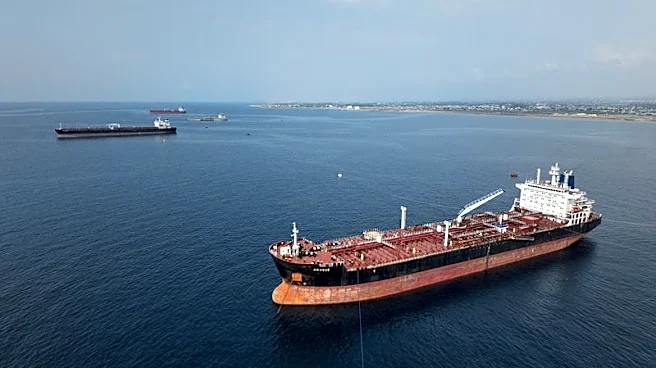
The United Arab Emirates (UAE) has announced a reduction in fuel prices for November, marking the first decrease in four months. This decision comes despite a recent surge in global oil prices, with Brent crude closing at a six-month high of $117.64 per
barrel and US WTI crude reaching $104.12 per barrel by the end of October. The price of Super 98 petrol will decrease by 5.5% to 4.16 dirhams per liter, Special 95 petrol will fall by 5.6% to 4.04 dirhams per liter, and E-Plus 91 will see the largest reduction of 5.7% to 3.97 dirhams per liter. Diesel prices will also drop by 1% to 4.75 dirhams per liter. Since 2015, when the UAE deregulated prices, fuel costs in the country have been linked to the global oil market. Despite the upcoming reduction, current fuel prices remain approximately 80% higher than they were in February, prior to the conflict with Iran.
Why It's Important?
This fuel price adjustment in the UAE holds significance for its domestic economy and consumer spending. Lower fuel prices can alleviate inflationary pressures on households and businesses, potentially boosting consumer confidence and discretionary spending. For industries reliant on transportation, such as logistics and retail, reduced fuel costs can lead to lower operational expenses, which might translate into more competitive pricing for goods and services. However, the context of rising global oil prices suggests that this reduction might be a strategic move to stabilize the domestic market rather than a reflection of a sustained downward trend in energy costs. The UAE's decision to cut prices despite global increases highlights the complexities of managing domestic economic stability amidst volatile international energy markets, especially for an oil-producing nation that deregulated its fuel prices.
What's Next?
The immediate impact will be felt by consumers and businesses in the UAE through lower costs at the pump starting in November. Analysts had previously anticipated further increases in retail prices, suggesting that this reduction might be a temporary measure or a response to specific internal economic considerations. The ongoing geopolitical risks and high transportation costs, as noted by Ahmed Zahir, a consultant at Dubai-based Qamar Energy, continue to support higher oil prices globally. Future fuel price adjustments in the UAE will likely remain sensitive to these international market dynamics, as well as any potential diplomatic breakthroughs or shifts in global supply and demand. The long-term trend will depend on the stability of global oil markets and the UAE's continued strategy for managing domestic energy costs.
Beyond the Headlines
The UAE's decision to lower fuel prices despite a global upswing in oil costs underscores a broader economic strategy to balance international market forces with domestic stability. This move could be interpreted as an effort to mitigate the impact of global inflation on its citizens and maintain economic competitiveness. It also highlights the unique position of oil-producing nations that are simultaneously exposed to global price fluctuations and responsible for managing internal consumer welfare. The deregulation of fuel prices in 2015 linked the UAE's domestic market directly to global trends, making such interventions more complex. This situation could prompt discussions about the long-term sustainability of such policies and the potential for greater diversification of energy sources to buffer against future volatility, even in a major oil-producing region.