






What's Happening?
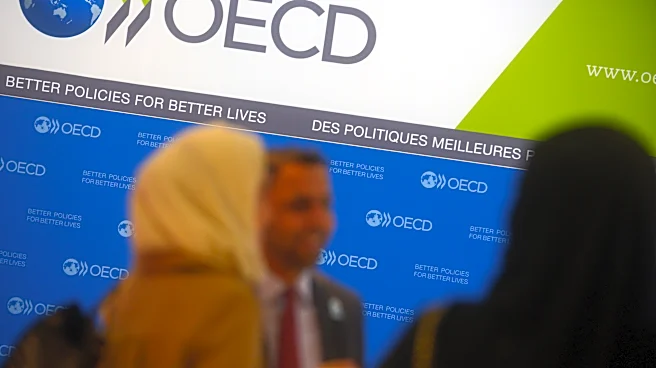
The Organisation for Economic Co-operation and Development (OECD) has reported that Africa's corporate debt markets are significantly underdeveloped, failing to meet the continent's economic scale and growing financial requirements. As of the end of 2025,
outstanding market-based debt totaled only $211 billion. The OECD's Africa Capital Markets Report 2026 indicates that capital markets are underutilized for long-term finance, especially when compared to other emerging economies. This underutilization limits their contribution to economic growth and resilience, particularly during global market stress when foreign lenders often withdraw. The corporate bond market, estimated at $35 billion, is 44% smaller in inflation-adjusted terms than its 2015 peak, largely due to reduced activity in South Africa. In 2025, companies across Africa issued no more than 20 bonds, with 17 from financial firms. Six countries—Egypt, Mauritius, Morocco, Mozambique, Nigeria, and South Africa—accounted for 80% of outstanding corporate debt. Only 17% of corporate debt issued in 2025 was in local currency, exposing borrowers to exchange-rate fluctuations.
Why It's Important?
The shallow corporate debt markets in Africa pose a significant challenge to the continent's economic stability and growth. The inability to secure long-term, local currency financing makes African companies and countries vulnerable to global market volatility and exchange-rate risks. This situation can deter investment, hinder infrastructure development, and limit the expansion of local businesses, ultimately impacting job creation and poverty reduction efforts. The OECD emphasizes that this financing shortfall could impede economic growth and leaders' goals to expand local financing, which is crucial for protecting companies and countries during periods of global market stress. The reliance on foreign lenders, who often pull back from perceived risky markets, exacerbates this vulnerability. The report also highlights that a more than 25% drop in aid to sub-Saharan Africa from OECD donor countries further underscores the urgent need for deeper domestic capital markets.
What's Next?
The OECD recommends that policymakers adopt a 'broad, whole-of-government approach' to address the economic and institutional hurdles hindering the development of bond markets in African countries. Key factors identified for deeper bond markets include regulatory quality, rule of law, exchange-rate stability, and well-developed pension funds. While equity markets in Africa saw a 49% surge in capitalization in 2025, this growth remains concentrated in four countries: South Africa, Egypt, Nigeria, and Morocco, which account for 88% of the total. The OECD also noted that three-quarters of large non-financial state-owned African enterprises remain unlisted, representing a substantial potential pool of assets that could be leveraged. Future efforts will likely focus on implementing reforms to improve regulatory environments, strengthen legal frameworks, and encourage the listing of state-owned enterprises to diversify and deepen capital markets.
Beyond the Headlines
The persistent shallowness of Africa's corporate debt markets reflects deeper structural issues, including governance challenges, underdeveloped financial infrastructure, and a lack of investor confidence. The limited issuance of local currency debt indicates a broader reliance on foreign currencies, which can lead to significant financial instability when exchange rates fluctuate. This situation also highlights a missed opportunity for domestic savings to be channeled into productive investments within the continent. The concentration of equity market growth in a few countries suggests that economic benefits are not evenly distributed, potentially exacerbating regional inequalities. Addressing these issues requires not only financial reforms but also broader institutional strengthening and political stability to create an attractive environment for both domestic and international investors. The long-term implications include sustained economic dependence on external financing and a slower pace of industrialization and economic diversification.