






What's Happening?
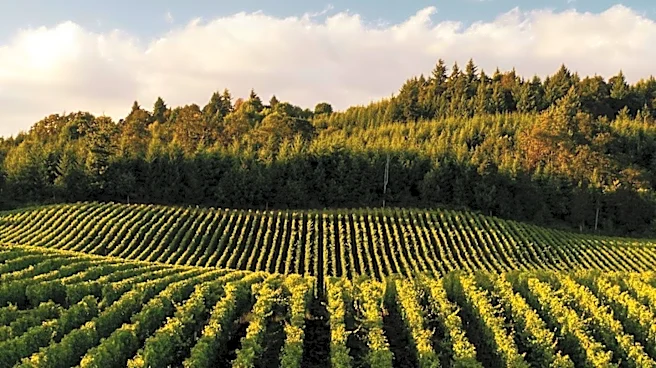
The Second Street Fire recently burned approximately 1,151 acres in Benton City, Washington, raising concerns among local grape growers and wineries. While the fire is now contained and no winery structures were damaged, the proximity to key appellations
like Red Mountain, Goose Gap, and Candy Mountain has led to worries about potential smoke impact on grapes. Marshall Edwards, who manages vineyards for Shaw Vineyards, expressed particular concern for Candy Mountain and the southern section of State Route 224 on Red Mountain. It is anticipated that hundreds of tons of grapes will be left unharvested due to fears of smoke taint, which can negatively affect wine quality. Candy Mountain, an appellation approved in 2020, is a smaller but important growing region for several prominent wineries, though it is less significant in volume compared to Red Mountain. The fire's impact assessment is ongoing, with growers evaluating the extent of smoke exposure on their crops.
Why It's Important?
The potential loss of hundreds of tons of grapes due to smoke impact could have significant economic repercussions for Washington's wine industry. The state is a major wine producer, and the quality of its grapes directly influences the market value and reputation of its wines. Smoke taint can render grapes unusable for winemaking, leading to financial losses for vineyards and wineries. This event highlights the vulnerability of agricultural industries, particularly viticulture, to environmental factors like wildfires, which are becoming more frequent and intense. The decision to leave grapes unharvested, while aimed at preserving wine quality, represents a direct economic hit. Furthermore, it underscores the ongoing challenges faced by agricultural sectors in regions prone to wildfires, necessitating adaptive strategies for crop protection and risk management.
What's Next?
Local growers and wineries will continue to assess the full extent of smoke impact on their grapes. This assessment will involve detailed analysis to determine which grapes are salvageable and which must be discarded to prevent smoke taint in the final wine product. The industry may explore new technologies or methods for mitigating smoke damage in future harvests. Additionally, there could be discussions within the Washington wine community about insurance coverage for smoke-related crop losses and potential government assistance programs. The incident may also prompt a review of fire prevention and response strategies in agricultural areas, particularly around valuable vineyards, to protect future harvests from similar threats.
Beyond the Headlines
This incident brings to light the broader implications of climate change on specialized agricultural sectors. As wildfire seasons intensify, regions like Washington's wine country face increasing threats to their unique terroir and economic stability. The concept of 'smoke taint' introduces a complex challenge for winemakers, requiring advanced scientific understanding and sensory evaluation to maintain product quality and consumer trust. Beyond immediate economic losses, there's a potential long-term impact on brand reputation if smoke-affected wines inadvertently enter the market. This situation could also accelerate research into smoke-resistant grape varietals or innovative vineyard management techniques designed to protect crops from atmospheric pollutants, pushing the industry towards more resilient and sustainable practices in the face of evolving environmental challenges.