
What's Happening?
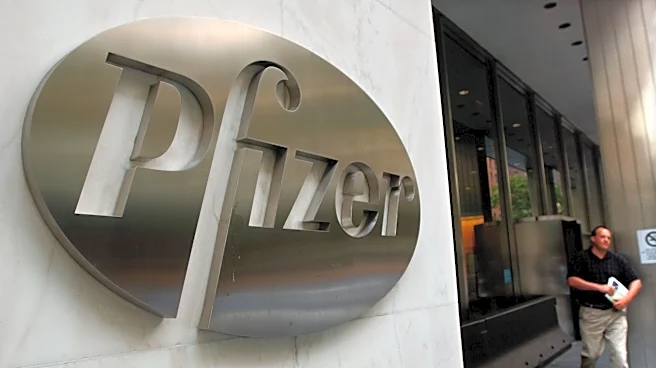
Pfizer CEO Albert Bourla announced at the Jefferies London Healthcare Conference that the company anticipates achieving high single-digit growth despite an ongoing period of patent expirations, expected
to last another two years. To counter this, Pfizer has invested $80 billion in acquisitions post-COVID-19 pandemic to bolster its pipeline and support new product launches. Bourla highlighted the strong performance of recently launched medicines, which grew 32% in the latest quarter and contribute an annualized revenue of $15 billion to $16 billion. The company initiated 20 Phase 3 studies this year, nearly doubling the previous year's number. Key areas of focus include oncology, with new products for breast and prostate cancer, and the development of obesity medications, particularly a monthly treatment option. Bourla also noted the potential of mevrometostat in prostate cancer, which could offer global rights to Pfizer, unlike its current XTANDI sales arrangement.
Why It's Important?
Pfizer's strategic shift and substantial investment in acquisitions are critical for its long-term financial health and market position in the U.S. pharmaceutical industry. The company's focus on oncology and obesity treatments addresses significant public health challenges and represents potentially lucrative markets. Success in these areas could offset revenue losses from patent expirations, ensuring continued innovation and access to new therapies for American patients. The emphasis on a monthly obesity drug reflects a response to consumer preferences, potentially increasing patient adherence and market penetration. Furthermore, Bourla's comments on the disparity in drug pricing between the U.S. and other developed countries underscore an ongoing political and economic debate that could impact pharmaceutical companies and healthcare costs for U.S. consumers.
What's Next?
Pfizer expects the first study results for its prostate cancer candidate, mevrometostat, early next year, with a second study following later in the year. The company is also advancing its CDK4 breast cancer program, the multiple myeloma treatment ELREXFIO, and lung cancer studies. In the obesity sector, Pfizer is conducting clinical trials to confirm the efficacy and tolerability of its monthly treatment and a switch study for patients on weekly treatments. The company aims to realize $7.2 billion in net savings by year-end, with an additional $1.5 billion in savings already announced. Bourla predicts that Chinese biopharmaceutical companies will emerge as major competitors by 2030, prompting Pfizer to focus on efficiency and innovation to maintain its competitive edge.
Beyond the Headlines
Pfizer's aggressive acquisition strategy and pipeline development reflect a broader trend in the pharmaceutical industry to navigate the 'patent cliff' phenomenon, where blockbuster drugs lose exclusivity, opening the door to generic competition. The company's pursuit of a monthly obesity drug highlights the evolving landscape of chronic disease management, where patient convenience and adherence are becoming increasingly important factors in treatment success and market adoption. Bourla's acknowledgment of the unsustainability of U.S. drug pricing disparities suggests that pharmaceutical companies are bracing for continued scrutiny and potential policy changes from both major U.S. political parties, which could reshape the economic model for drug development and access in the country. The integration of artificial intelligence for productivity improvements also signals a technological shift within the industry.