






What's Happening?
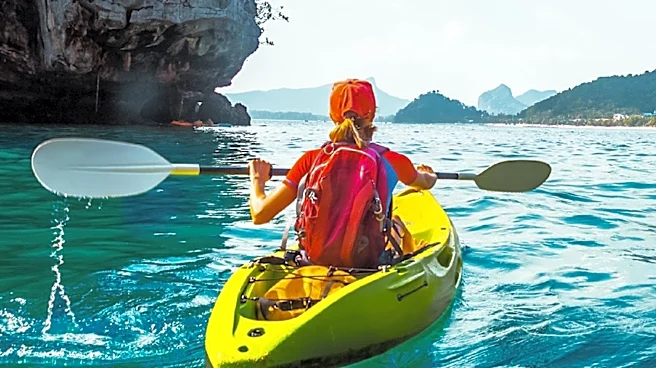
Kayaks position paddlers low in the boat with legs extended, utilizing a double-bladed paddle for alternating strokes. This design contrasts with canoes, where paddlers sit on raised seats or kneel and use a single-bladed paddle. Kayaks are available
in sit-inside models with enclosed decks or sit-on-top models with open decks. The double-bladed paddle makes kayaks intuitive to operate, allowing most beginners to achieve comfortable movement quickly, making them a natural choice for solo outings. Their lower profile in the water also makes them less susceptible to wind compared to canoes, which have higher sides that can catch the wind. Long sea and touring kayaks, with enclosed decks and sealed compartments, are specifically designed for open water and waves.
Why It's Important?
The distinction between kayaks and canoes has significant implications for recreational water sports and outdoor equipment markets. Kayaks' ease of learning and solo usability broadens participation, attracting individuals seeking independent outdoor activities. This drives demand for diverse kayak models, accessories, and instructional programs. The superior wind handling of kayaks makes them suitable for a wider range of water conditions, extending the paddling season and geographical reach for enthusiasts. For manufacturers, this necessitates continuous innovation in kayak design, materials, and safety features to cater to various niches, from whitewater to fishing. The accessibility and versatility of kayaks contribute to the growth of water-based tourism and local economies in areas with suitable waterways, impacting rental businesses, guide services, and related retail sectors.
What's Next?
The market for kayaks is likely to continue diversifying, with ongoing advancements in materials for lighter and more durable designs. Manufacturers may focus on enhancing comfort and ergonomics, particularly for longer trips, to address potential issues like cramped leg positions. The development of specialized kayaks for specific activities, such as fishing or touring, will probably expand. As more people seek solo and accessible outdoor experiences, there could be an increased emphasis on user-friendly features and integrated storage solutions. Additionally, the growing interest in water sports may lead to more organized paddling events, clubs, and educational programs, further solidifying kayaks' role in recreational activities.
Beyond the Headlines
The preference for kayaks over canoes for solo and wind-affected paddling highlights a broader societal trend towards individual pursuits and self-reliance in leisure activities. This shift can be seen as a reflection of modern lifestyles where personal time and independent exploration are highly valued. The intuitive nature of kayaking also lowers the barrier to entry for outdoor sports, making water recreation accessible to a wider audience, including those who may not have prior experience. This increased accessibility can foster a greater appreciation for natural aquatic environments and promote environmental stewardship. Furthermore, the design differences between kayaks and canoes underscore the importance of specialized equipment in optimizing performance and enjoyment for various outdoor conditions and personal preferences, influencing how individuals engage with nature.