








What's Happening?
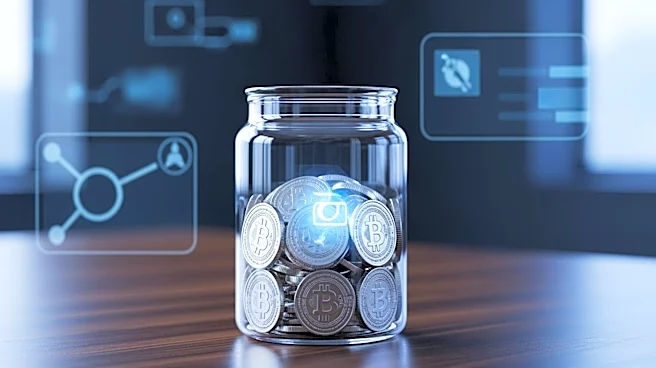
Stablecoins, digital currencies that operate on blockchain technology, are being heralded as a revolutionary force in the payments industry. These digital dollars can facilitate instant cross-border transactions at a fraction of the cost of traditional
systems. Beyond replacing credit cards or the SWIFT system, stablecoins enable continuous machine-to-machine payments, potentially transforming various sectors. This technology could lead to new economic activities, such as automated micro-transactions between devices, which are currently impractical due to existing payment system limitations. The potential for stablecoins to disrupt industries like energy, telecommunications, and retail is significant, as they could enable real-time pricing and dynamic market responses.
Why It's Important?
The adoption of stablecoins could significantly impact U.S. industries by reducing transaction costs and improving cash flow for businesses. For instance, credit card fees, which consume a substantial portion of transaction costs, could be minimized, enhancing profit margins. The ability for machines to transact autonomously could lead to a new commerce ecosystem, affecting industries reliant on traditional payment methods. This shift could pressure financial intermediaries to adapt to a high-frequency, low-value transaction environment. The broader economic implications include increased efficiency and the potential for new business models centered around automated micro-payments.
What's Next?
For stablecoins to realize their full potential, the development of faster and more efficient blockchain infrastructure is crucial. Current blockchains often struggle with congestion and high transaction fees, which could hinder the widespread adoption of machine-to-machine payments. As industries begin to explore these new possibilities, there will be a push for technological advancements to support the high throughput and low latency required for these transactions. Companies and developers focusing on building reliable and efficient payment systems will likely lead the charge in this emerging market.
Beyond the Headlines
The rise of machine-to-machine payments could lead to ethical and regulatory challenges, as the automation of transactions raises questions about data privacy and security. Additionally, the shift towards automated economic activities may require new legal frameworks to address liability and accountability in machine-driven transactions. The cultural impact of this technological evolution could also be profound, as it changes how businesses and consumers interact with financial systems.