






What's Happening?
Pete Crow-Armstrong's 2026 season with the Chicago Cubs is being hailed as one of the best in franchise history, positioning him as a likely National League MVP. His performance included joining the 40-40 club, a feat that involves hitting 40 home runs
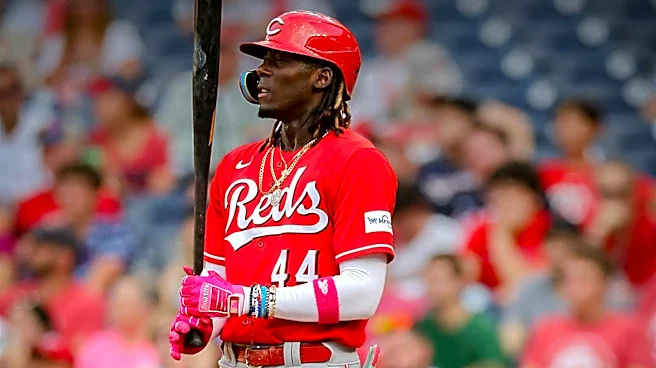
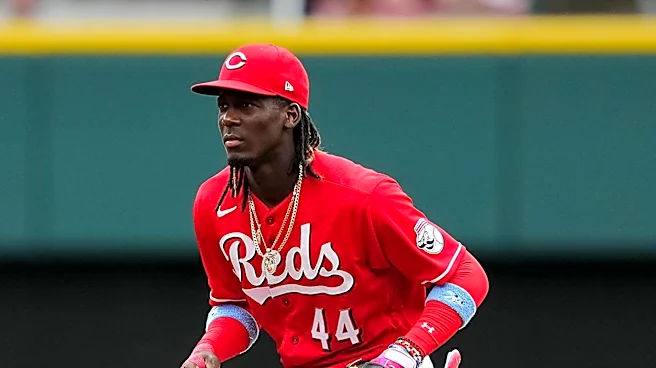
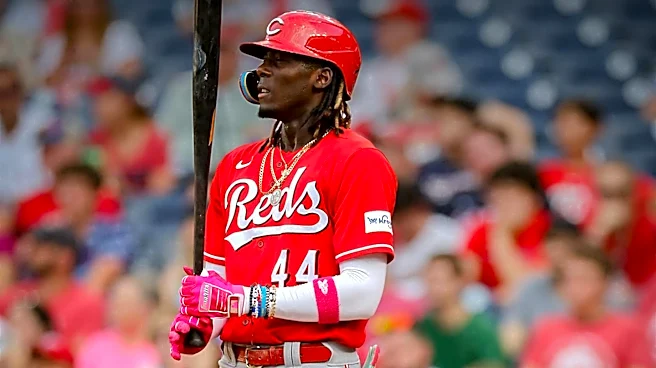
and stealing 40 bases in a single season. Prior to this stellar season, Crow-Armstrong signed a six-year contract extension with the Cubs, which is now considered a highly team-friendly deal with an average annual salary of less than $20 million. This contrasts sharply with the situation facing the Cincinnati Reds and their own MVP candidate, Elly De La Cruz. Despite De La Cruz's impressive performance as one of baseball's top shortstops, the Reds are in a difficult position regarding his future contract, as he is approaching arbitration and is expected to command a significant salary, potentially exceeding the team's financial capacity.
Why It's Important?
The Cubs' proactive decision to extend Pete Crow-Armstrong's contract before his breakout 2026 season has provided them with a long-term, cost-effective cornerstone for their franchise. This strategic move highlights the value of early investment in promising young talent, securing a player's prime years at a potentially lower cost than if negotiations occurred after peak performance. Conversely, the Reds' predicament with Elly De La Cruz illustrates a common challenge for small-market teams: the difficulty of retaining superstar players once they reach arbitration and free agency, especially when their market value skyrockets. This disparity in contract management could significantly impact the competitive balance within the NL Central, giving the Cubs a sustained advantage while forcing the Reds to consider trading a key player for prospects, potentially hindering their immediate competitiveness.
What's Next?
For the Chicago Cubs, the focus will be on maximizing Pete Crow-Armstrong's performance under his new contract, which locks him in through 2032. His continued development and leadership will be crucial for the team's aspirations for future championships. The Cincinnati Reds, however, face a critical decision regarding Elly De La Cruz. As he approaches arbitration, the team must weigh the financial implications of a massive contract against the potential return from trading him for a package of prospects. This decision will have long-lasting consequences for the Reds' roster construction and competitive strategy. The upcoming lockout could also influence these negotiations, adding another layer of complexity to the situation for both teams.
Beyond the Headlines
The contrasting situations of Crow-Armstrong and De La Cruz underscore the broader economic realities and strategic challenges faced by MLB franchises. The Cubs' move exemplifies a trend towards securing young talent early to mitigate future financial risks and build a stable core. The Reds' dilemma, on the other hand, highlights the systemic issues small-market teams face in retaining homegrown stars, often leading to a cycle of rebuilding through trades. This dynamic can impact fan engagement and loyalty, as supporters of smaller market teams frequently witness their favorite players depart for larger payrolls. The long-term implications extend to the league's competitive landscape, raising questions about equitable opportunities for all teams to contend for championships.