







What's Happening?
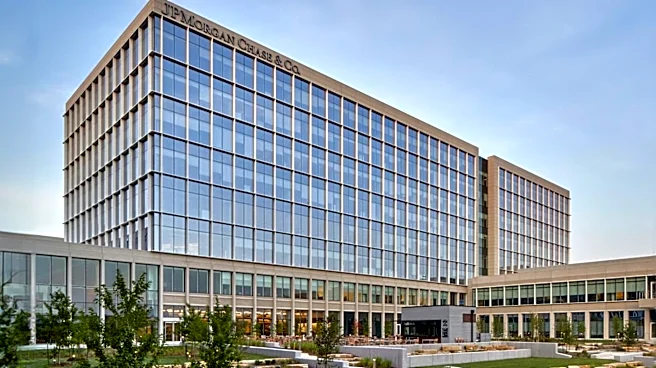
JPMorgan Chase's new office tower at 270 Park Avenue in New York City is reportedly the city's most expensive office building to date, with an estimated cost of $6 billion. This figure, reported by The Wall Street Journal, includes not only construction
costs and air rights but also luxury amenities such as furniture and art. The 2.5 million-square-foot tower's cost per square foot is approximately $2,500, significantly higher than other high-end office buildings in New York, such as 50 Hudson Yards, which cost around $1,400 per square foot in 2017. The bank has been somewhat evasive about the exact cost but has highlighted the building's lavish features, including large artworks, an indoor flagpole, an Irish pub, a wellness center, and a light show on its exterior. This investment is part of a larger 6 million-square-foot midtown campus being developed by JPMorgan Chase.
Why It's Important?
The construction of JPMorgan Chase's 270 Park Avenue tower signifies a major investment in New York City's commercial real estate market and reflects the bank's robust financial performance, with profits reaching $59 billion in 2024. This development is particularly noteworthy given CEO Jamie Dimon's past penny-pinching approach, including closing the gym at the bank's old headquarters and advising against building new headquarters. The record-breaking cost of this tower could set a new benchmark for luxury office space in the U.S., potentially influencing future commercial development trends and property values in major urban centers. It also highlights the increasing demand for state-of-the-art facilities by large corporations, which are willing to invest heavily to attract and retain top talent and project a strong corporate image. The project's scale and cost demonstrate confidence in the long-term viability of physical office spaces, even in an era of remote work discussions.
What's Next?
The completion and operationalization of 270 Park Avenue could spur further high-end commercial real estate development in New York City and other major U.S. financial hubs. Other corporations might feel pressure to upgrade their facilities to compete for talent and maintain a modern corporate image, potentially leading to a new wave of luxury office construction. This trend could drive up construction costs and property values, impacting smaller businesses and potentially exacerbating affordability issues in urban areas. Additionally, the focus on lavish amenities within such buildings might become a standard expectation for new corporate headquarters, influencing architectural design and urban planning. The success of this project could also reinforce the perception that physical presence remains crucial for major financial institutions, despite advancements in remote work technology.
Beyond the Headlines
The exorbitant cost and luxurious features of JPMorgan Chase's new tower raise questions about corporate spending priorities and their broader societal implications. While the bank emphasizes the building as a 'physical manifestation of our values,' it also contrasts sharply with economic realities faced by many. This development could symbolize a growing divergence between the financial elite and the general public, highlighting the immense capital available to large corporations. Ethically, it prompts a discussion about responsible corporate investment and whether such lavish expenditures align with broader societal needs or contribute to economic inequality. Culturally, it reinforces New York City's image as a global financial capital, but also as a place where extreme wealth is visibly concentrated, potentially influencing public perception of the banking industry and corporate America.