


What's Happening?
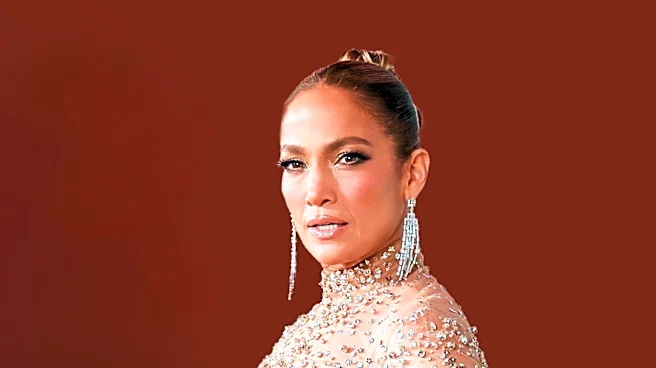
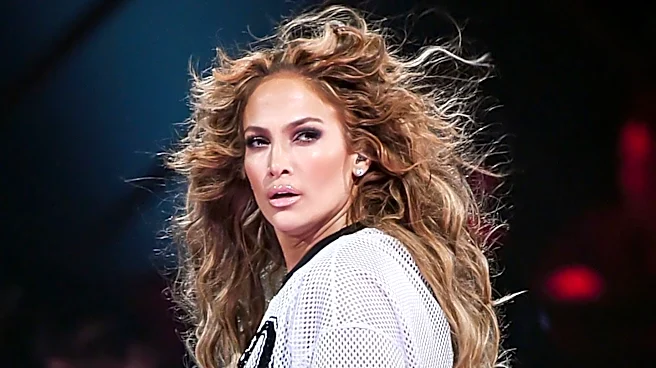
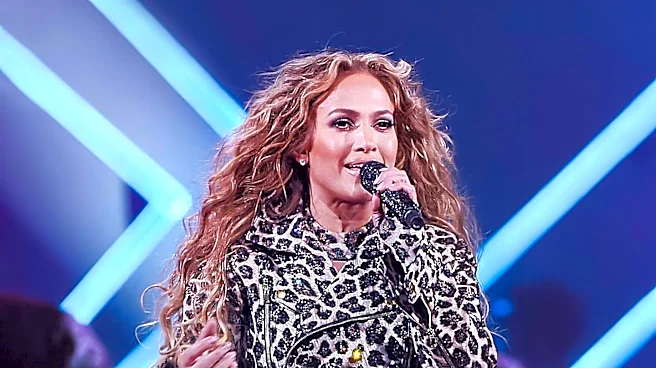
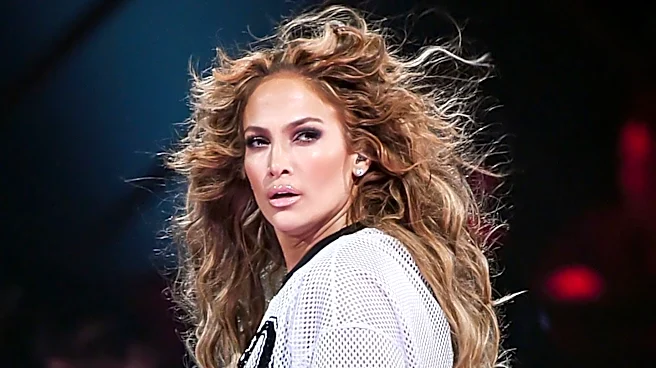
Jennifer Lopez has stated that being Latina limited her early acting opportunities in Hollywood, claiming she received fewer offers than perceived and had to 'create things for myself.' She noted that she did not fit the mold of 'a white actress' and suggested
that while casting has become more diverse, performers still need to forge their own paths. These comments have generated criticism on social media, with some users pointing to her extensive filmography and high-profile career as counter-evidence. A representative for Lopez clarified that her remarks pertained to the 1990s and early 2000s, citing similar experiences from other Latino actors like John Leguizamo, Michael Peña, and Eva Longoria. Toronto-based pop culture critic Rachel Ho acknowledged Lopez's hard work and potential discrimination but also suggested that Lopez might lack awareness of her privileges within the industry.
Why It's Important?
This discussion is important as it reignites the ongoing conversation about diversity, representation, and systemic barriers within the U.S. entertainment industry. Lopez's comments, despite her success, highlight the persistent challenges faced by actors from underrepresented groups, particularly in earlier decades. The public's mixed reaction underscores the complexity of these issues; while some empathize with her experience, others perceive her as privileged, demonstrating a divide in understanding the nuances of discrimination. This debate can influence how studios and casting directors approach diversity initiatives, potentially leading to more critical self-reflection on equitable opportunities. It also encourages a deeper examination of the types of roles available to non-white actors and whether success in one area guarantees access to a wide range of meaningful work.
What's Next?
The conversation initiated by Jennifer Lopez's comments is likely to continue within entertainment circles and on social media platforms. Other actors, particularly those from diverse backgrounds, may be prompted to share their own experiences, further enriching the dialogue about industry inclusivity. This could lead to increased pressure on Hollywood studios and production companies to not only cast diverse talent but also to develop more diverse narratives and roles that move beyond stereotypes. Industry panels and discussions on diversity and representation might feature these perspectives more prominently. For Lopez herself, these comments could shape her future projects and advocacy efforts, potentially focusing more on creating opportunities for emerging diverse talent.
Beyond the Headlines
Beyond the immediate controversy, this event touches on the broader societal issue of how privilege and discrimination are perceived and discussed. It reveals that even highly successful individuals from marginalized groups can face unique challenges that are not always apparent to the general public. The differing reactions to Lopez's statements highlight a societal struggle to reconcile individual success with systemic inequalities. It also brings to light the concept of 'invisible labor' – the extra effort and self-creation that individuals from underrepresented groups often undertake to achieve success in fields dominated by a majority. This discussion can contribute to a more nuanced understanding of intersectionality and the varied experiences of individuals within the entertainment industry and beyond.