





What's Happening?
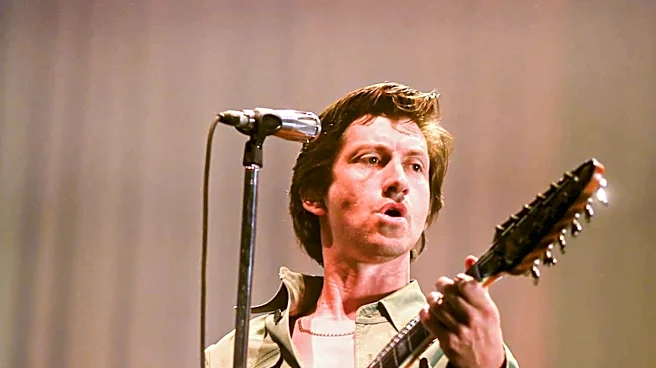
The Arctic Monkeys' 2006 debut album, 'Whatever People Say I Am, That’s What I’m Not,' is recognized as a generation-defining record for British guitar bands. Arriving amidst a new wave of groups like The Libertines, Bloc Party, and Franz Ferdinand, the
Sheffield-formed band quickly garnered significant hype. Frontman Alex Turner's observational lyrics, featured in songs such as 'Fake Tales of San Francisco' and 'When the Sun Goes Down,' resonated strongly with fans, leading to high demand for their early performances. The album's success also highlighted the growing influence of the internet on the music industry, as the band transitioned from an unknown indie act on MySpace to a chart-topping sensation within six months. This rapid ascent underscored a shift in how musical talent could be discovered and promoted, bypassing traditional gatekeepers.
Why It's Important?
The Arctic Monkeys' debut is important because it marked a significant moment in the evolution of the music industry, particularly concerning the power of digital platforms. Their rapid rise, fueled by online fan engagement, demonstrated the internet's capacity to launch artists into mainstream success, a phenomenon that was relatively new at the time. This shift empowered independent artists and altered traditional marketing and distribution models. The album's critical and commercial triumph also solidified the 'new wave of British guitar bands' movement, influencing subsequent artists and shaping the sound of indie rock for years to come. It showcased how authentic, relatable songwriting, combined with accessible online platforms, could create a powerful connection between artists and their audience, leading to widespread cultural impact.
What's Next?
While the source focuses on the historical impact of the debut album, the trajectory set by 'Whatever People Say I Am, That’s What I’m Not' suggests a continued evolution in how music is consumed and how artists achieve prominence. The early success of the Arctic Monkeys, driven by internet buzz, foreshadowed the current landscape dominated by streaming services and social media. Future artists will likely continue to leverage these platforms for discovery and fan engagement, further decentralizing the music industry. The band's enduring legacy also implies that albums with strong lyrical content and a distinct sound will continue to resonate, regardless of changing industry trends, influencing new generations of musicians and listeners.
Beyond the Headlines
The success of 'Whatever People Say I Am, That’s What I’m Not' extends beyond its musical achievements, offering insights into the broader cultural impact of digital connectivity. The album's rise through MySpace demonstrated an early example of viral marketing and community-driven success, predating the widespread use of social media for artist promotion. This phenomenon highlighted a democratization of taste-making, where fans, rather than just critics or record labels, could collectively propel an artist to fame. Ethically, it raised questions about authenticity and commercialism in the digital age, as bands navigated the balance between organic growth and manufactured hype. Culturally, the album captured the zeitgeist of a generation, reflecting social observations and anxieties through its lyrics, and solidifying its place as a touchstone for British youth culture in the mid-2000s.