









What's Happening?
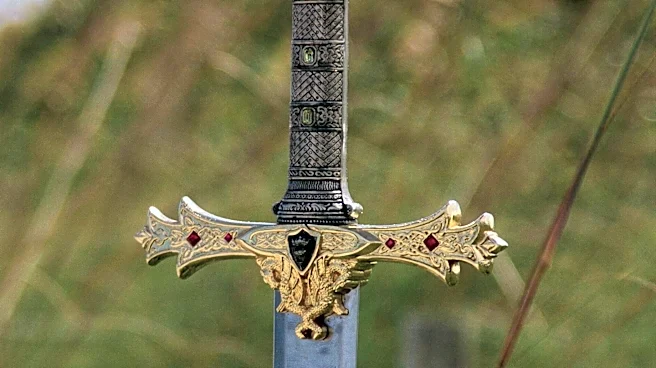
Georgia, a woman who recently lost her father, discovered a surprising artifact while sorting through his belongings. Among the items left behind was a Yemeni jambiya, a traditional curved dagger with a silver-covered hilt and scabbard, likely dating
back to the 19th century. This dagger, a symbol of Yemeni culture and identity, was acquired by her father during his time in Saudi Arabia in the early 1990s. He had purchased it from a local who claimed it was a family heirloom. Georgia recalled her father showing her the dagger during her childhood, but it had been stored away for decades due to safety concerns. The discovery of the dagger brought back memories of her father's adventurous life and his passion for collecting unique items.
Why It's Important?
The discovery of the dagger highlights the personal and cultural significance of family heirlooms and artifacts. For Georgia, the dagger serves as a tangible connection to her father's legacy and his experiences abroad. It underscores the emotional impact of losing a parent and the value of preserving family history. The jambiya, beyond its personal significance, is a cultural artifact that represents Yemeni traditions and social status. This story illustrates how personal belongings can carry historical and cultural narratives, offering insights into the past and preserving memories for future generations.
What's Next?
Georgia plans to keep the dagger as a family heirloom, intending to pass it down to future generations. This decision reflects a desire to maintain her father's legacy and the stories associated with his life and travels. The dagger's historical and cultural value may also prompt further interest and research into its origins and significance. As Georgia shares her story, it may inspire others to explore and preserve their own family histories, recognizing the importance of personal artifacts in connecting with the past.