






What's Happening?
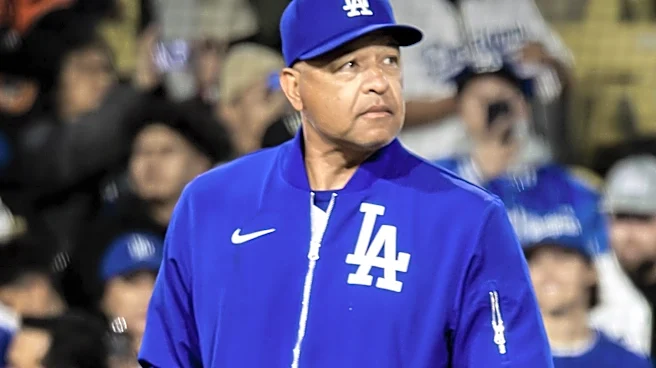
The Los Angeles Dodgers have become a focal point in the ongoing labor discussions between Major League Baseball (MLB) and the MLB Players Association (MLBPA). The team's significant financial investments, including over a billion dollars spent in recent
offseasons and winning two consecutive World Series titles, have sparked debates about the need for a salary cap to ensure competitive balance. The Dodgers' recent acquisition of pitcher Tarik Skubal from the Detroit Tigers further emphasizes their financial prowess. Skubal, impressed by the Dodgers' advanced facilities and resources, highlights the team's ability to maintain a competitive edge beyond just player salaries. The Dodgers' strategy involves substantial investments in player development and infrastructure, which are not constrained by a salary cap, allowing them to attract top talent and remain a dominant force in MLB.
Why It's Important?
The Dodgers' approach underscores the limitations of a salary cap in addressing competitive balance within MLB. While a salary cap might level the playing field in terms of player salaries, it does not address disparities in team resources and infrastructure. The Dodgers' ability to invest heavily in facilities and player development gives them a significant advantage over smaller market teams, which may not have the financial capacity to match such investments. This situation highlights the broader economic dynamics within MLB, where financial powerhouses can maintain dominance through strategic investments beyond player salaries. The ongoing labor discussions and potential lockout reflect the complexities of achieving true competitive balance in a league with significant financial disparities among teams.
What's Next?
As MLB and the MLBPA continue negotiations, the focus will likely remain on finding solutions that address both salary disparities and the broader resource gaps between teams. The potential for a lockout looms, with discussions around implementing a salary cap and other measures to promote competitive balance. Stakeholders, including team owners, players, and fans, will be closely watching the developments, as the outcomes could significantly impact the league's economic structure and competitive landscape. The Dodgers' continued success and financial strategy will likely serve as a case study in these discussions, influencing future policy decisions within MLB.