





What's Happening?
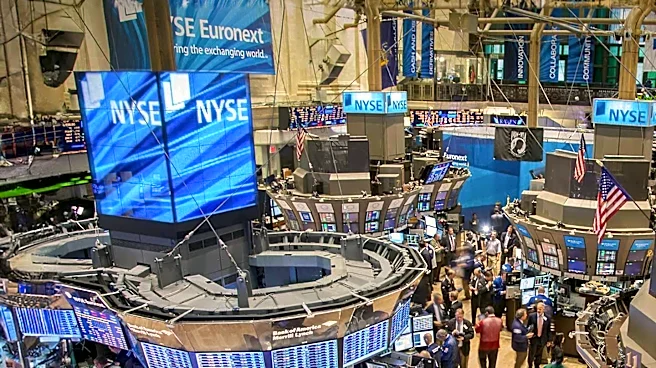
The New York Stock Exchange (NYSE) and Nasdaq are the two primary platforms for trading major American companies. The NYSE, established in 1792, maintains a physical trading floor on Wall Street, though most trading is now electronic. It is known for listing
large, established companies across various sectors, including Berkshire Hathaway, JPMorgan Chase, and Coca-Cola. The Nasdaq, founded in 1971, operates as a fully electronic market and is predominantly associated with technology and growth companies such as Apple, Microsoft, and Amazon. Both exchanges operate during the same hours, from 9:30 AM to 4:00 PM ET, Monday through Friday, and are subject to tight regulation. While the NYSE utilizes designated market makers on its floor to ensure orderly trading, the Nasdaq relies on multiple market makers competing to quote prices, thereby adding liquidity. Despite their structural differences, both exchanges list thousands of companies and rank among the world's largest by market value.
Why It's Important?
The distinction between the NYSE and Nasdaq is significant for understanding the landscape of U.S. financial markets and the types of companies that dominate each exchange. The NYSE's historical presence and physical trading floor symbolize traditional finance, often attracting older, more established corporations. This can influence investor perception, as companies listed on the NYSE might be viewed as more stable or mature. Conversely, Nasdaq's fully electronic nature and focus on technology and growth companies reflect the modern, innovation-driven segments of the economy. This makes Nasdaq a key indicator for the performance of the tech sector, which has a substantial impact on the overall U.S. economy. The indices tied to each exchange, such as the Dow Jones Industrial Average and S&P 500 (drawing from both) and the Nasdaq Composite and Nasdaq-100 (tech-heavy), provide different lenses through which to assess market performance and economic trends. For investors, understanding these differences can inform portfolio diversification and risk assessment, as tech-heavy Nasdaq indices can exhibit greater volatility compared to broader market indices.
What's Next?
The ongoing evolution of financial technology and market structures will continue to shape how the NYSE and Nasdaq operate. While the NYSE has largely transitioned to electronic trading, the role of its physical floor may continue to diminish or adapt further. The Nasdaq, already fully electronic, will likely continue to innovate in trading technology and market efficiency. Companies will also continue to evaluate which exchange best suits their strategic needs, considering factors like visibility, peer groups, and listing costs. The competition between these two giants will drive advancements in trading platforms and services, potentially leading to more sophisticated tools and greater accessibility for investors. Regulatory bodies will also continue to monitor both exchanges to ensure fair and orderly markets, adapting rules as technology and market practices evolve. The performance of these exchanges will remain a critical barometer for the health and direction of the U.S. economy, particularly given their influence on major market indices.
Beyond the Headlines
The contrasting models of the NYSE and Nasdaq reflect a broader philosophical divide in financial markets: the balance between human interaction and technological automation. The NYSE's enduring physical floor, even with electronic dominance, represents a vestige of traditional market-making, where human judgment and interaction played a more central role. This can evoke discussions about the value of human oversight versus the efficiency of algorithms in complex financial systems. The Nasdaq, on the other hand, embodies the future of fully automated, high-speed trading, raising questions about market fairness, algorithmic biases, and the potential for flash crashes. These differences also highlight the shifting power dynamics within the U.S. economy, from industrial giants to technology innovators. The choice of listing on one exchange over the other can be a strategic statement about a company's identity and its target investor base, influencing its public image and long-term trajectory. Ultimately, the coexistence and evolution of both models underscore the dynamic and multifaceted nature of American capitalism.