




What's Happening?
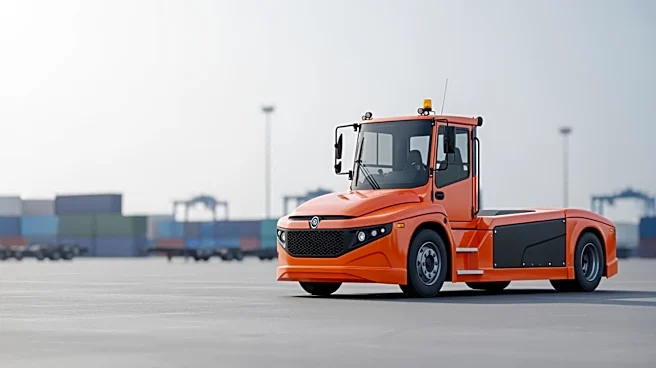
APM Terminals Los Angeles has placed an order for 40 Orange EV HUSK-e XP battery-electric terminal tractors, marking a significant step in port electrification. This order makes Pier 400 the first container terminal at the Port of Los Angeles to fully
electrify its on-dock rail drayage fleet. The contract, signed on June 16, 2026, increases Pier 400's electric fleet to 60 units, supported by funding from the US Environmental Protection Agency's Clean Ports Program. The new tractors build upon 20 units deployed since April 2025, which have logged 42,000 zero-emission hours and displaced over 40,700 diesel-equivalent gallons, avoiding an estimated 427 metric tons of CO2 emissions. The initiative is backed by an $80 million sub-recipient contract under the program.
Why It's Important?
The expansion of the electric fleet at Pier 400 is a crucial development in reducing emissions and promoting sustainability within the shipping industry. By transitioning to battery-electric tractors, APM Terminals is setting a precedent for other ports to follow, potentially leading to widespread adoption of cleaner technologies. This move not only aligns with environmental goals but also enhances operational efficiency, as demonstrated by the high uptime rate of the existing electric tractors. The initiative supports the broader objectives of the Clean Ports Program, aiming to mitigate the environmental impact of port operations and improve air quality in surrounding communities.
What's Next?
With all 60 units expected to be operational by January 2027, Pier 400 will achieve a 60% conversion rate of its terminal tractor fleet to battery-electric, the highest among container terminals at the Port of Los Angeles. Prior to the delivery of the new units, lead mechanics from the International Longshore and Warehouse Union will undergo Level 2 electrical safety training to ensure safe and efficient operation. The successful implementation of this project may encourage other ports to adopt similar electrification strategies, potentially leading to further investments in clean technology across the industry.