






What's Happening?
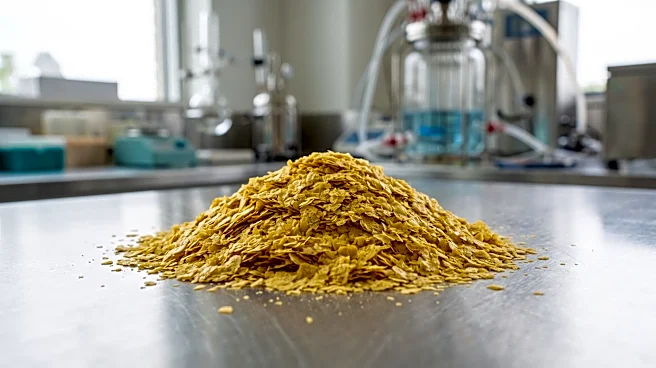
British startup Quest Meat has filed a patent in the U.S. for a novel process to culture animal cells for cultivated meat. This new method involves growing animal cells on ground, dead nutritional yeast flakes, offering an alternative to traditional substrates
like plastic beads or expensive edible gels. This innovation aims to provide a more cost-effective and potentially scalable solution for the production of cultivated meat. The development is part of a broader trend in the food industry where companies are exploring various plant-based and fermentation-derived ingredients to enhance the sustainability and efficiency of alternative protein production. Other companies are also innovating in this space, with some focusing on seaweed-based technology for cultivated meat, while others are developing scalable, plant-free cultivation with defined media or hybrid formulations using ingredients like underutilized broccoli biomass.
Why It's Important?
Quest Meat's patent filing in the U.S. for using nutritional yeast flakes in cultivated meat production is significant for several reasons. Primarily, it addresses one of the major hurdles in the cultivated meat industry: the high cost and scalability of growth media and scaffolding materials. By utilizing readily available and relatively inexpensive nutritional yeast flakes, Quest Meat could potentially lower production costs, making cultivated meat more competitive with traditional meat products. This innovation could accelerate the commercialization and broader adoption of cultivated meat, contributing to a more sustainable food system. Furthermore, it highlights the ongoing diversification of approaches within the cultivated meat sector, moving beyond conventional methods to explore novel, plant-based substrates. This could also open new avenues for agricultural byproducts or underutilized plant resources to be integrated into the alternative protein supply chain, enhancing overall resource efficiency.
What's Next?
Following the patent filing, Quest Meat will likely focus on further developing and scaling its patented process. This could involve securing additional funding, establishing pilot production facilities, and conducting extensive research and development to optimize cell growth and meat quality using nutritional yeast flakes. If successful, this technology could attract partnerships with larger food companies or investors looking to enter the cultivated meat market with more cost-effective solutions. The U.S. patent could also provide Quest Meat with a competitive advantage in the rapidly evolving alternative protein landscape. Other companies in the cultivated meat sector may also explore similar low-cost, plant-based scaffolding materials, potentially leading to a new wave of innovation in production methods. Regulatory approvals for products developed using this new process would be a critical next step before commercialization.
Beyond the Headlines
The use of nutritional yeast flakes in cultivated meat production represents a fascinating intersection of biotechnology, food science, and sustainability. Beyond the immediate cost benefits, this approach could contribute to a more circular economy by potentially utilizing byproducts from other industries or creating new markets for yeast production. Ethically, using plant-based substrates like yeast flakes might also enhance the appeal of cultivated meat to consumers who are wary of animal-derived components in the growth media, even if the cells themselves are animal-derived. Legally, the patent protection will be crucial for Quest Meat to safeguard its intellectual property in a competitive and rapidly growing industry. Culturally, innovations like this could further normalize the concept of lab-grown meat, making it more palatable and acceptable to a wider consumer base by emphasizing its plant-based production elements, thereby accelerating the shift away from conventional animal agriculture.