




What's Happening?
Itron and Pacific Gas and Electric Company (PG&E) are expanding their collaboration to enhance grid edge intelligence in California, aiming to reduce wildfire risks and improve grid reliability. This initiative involves deploying Itron’s Grid Edge Intelligence
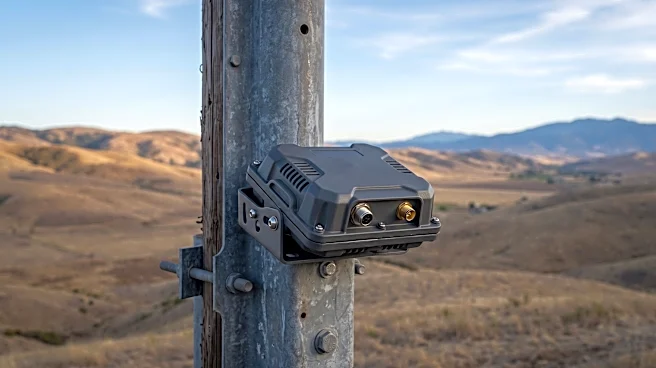
(GEI) solutions, which provide real-time visibility into grid conditions. The technology is designed to detect and classify potential faults that could lead to wildfires or power outages. Thousands of advanced sensing devices are being deployed in high-risk areas within PG&E's service territory to proactively identify and address issues. This scaled pilot builds on an initial proof-of-concept, with plans to significantly increase the deployment of these devices by 2030. The collaboration focuses on improving response times and preventing problems before they escalate into major incidents. The combination of detection and classification is particularly vital in California's High Fire Threat Districts, where dry, windy conditions and aging infrastructure can quickly turn a small electrical fault into a catastrophic wildfire.
Why It's Important?
This collaboration is critically important for California, a state frequently impacted by devastating wildfires, many of which have been linked to utility infrastructure. By deploying advanced grid edge intelligence, Itron and PG&E aim to proactively mitigate wildfire risks, thereby protecting communities, natural resources, and critical infrastructure. Improved grid reliability will reduce the frequency and duration of power outages, which can have significant economic and social consequences. For PG&E, this initiative is a crucial step in addressing past criticisms and liabilities related to wildfires, potentially restoring public trust and ensuring regulatory compliance. For Itron, the partnership with a major utility like PG&E in a high-profile region like California enhances its market position and demonstrates the effectiveness of its GEI solutions. The success of this pilot could set a precedent for other utilities in wildfire-prone areas across the U.S., driving broader adoption of similar technologies and fostering a more resilient national energy infrastructure.
What's Next?
Itron and PG&E plan to continue validating advanced fault prevention and location technologies at scale. The current deployment of thousands of Itron grid edge sensing endpoints in high fire-risk areas will be expanded, with a target of approximately 10,000 devices by 2027 and a significant increase by 2030. The companies will focus on evaluating the system's safety, accuracy, and precision under realistic operational conditions. This ongoing evaluation will help establish a clearer understanding of the technology's performance, capabilities, and limitations. The insights gained from this pilot will inform future deployment strategies and potential enhancements to the GEI solutions. Success in California could lead to the adoption of these technologies by other utilities facing similar wildfire challenges, potentially transforming grid management practices nationwide. The collaboration also emphasizes the importance of safety, reliability, and affordability for California communities, suggesting that future developments will continue to prioritize these aspects.
Beyond the Headlines
The partnership between Itron and PG&E represents a significant shift in how utilities approach wildfire prevention, moving from reactive measures to proactive, intelligence-driven strategies. This technological advancement highlights the growing intersection of digital innovation and critical infrastructure management. The ethical implications of such deployments include balancing data privacy with public safety, as real-time grid monitoring collects vast amounts of operational data. Furthermore, the long-term success of these technologies will depend not only on their technical efficacy but also on public acceptance and regulatory support. This initiative could also spur further innovation in grid modernization, leading to more resilient, efficient, and sustainable energy systems. The broader societal impact includes enhanced community safety, reduced economic losses from wildfires, and a potential decrease in the carbon footprint associated with large-scale blazes. This proactive approach to wildfire mitigation could serve as a model for addressing other climate-related challenges impacting critical infrastructure.