
What's Happening?
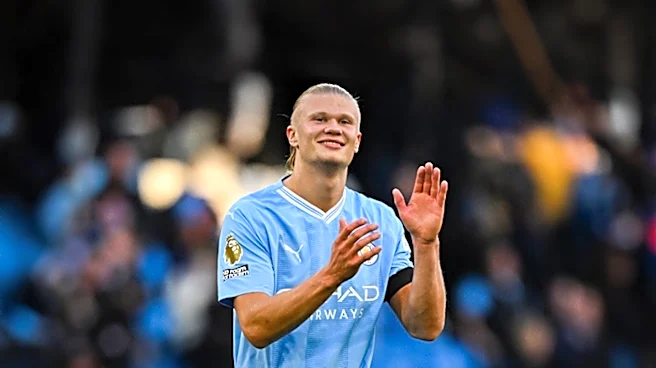
Footballer Erling Haaland has launched a legal dispute against Norwegian Air concerning a social media post. The airline published an image featuring Haaland's distinctive man bun photoshopped onto a plane, accompanied by the caption, "We've never looked
more Norwegian." Haaland's team claims this post unlawfully exploited his likeness, identity, and visual branding. The dispute centers on the use of his iconic hairstyle, which, despite him having since changed it, remains a significant part of his public image. Norwegian Air's media officer, Eivind Hammer Myhre, expressed regret that their "cheers of support were met with a lawsuit," hoping for a constructive dialogue to continue supporting shared sporting heroes. This incident highlights the increasing scrutiny celebrities place on the unauthorized use of their image and personal branding in advertising.
Why It's Important?
This legal action underscores the growing importance of personal branding and image rights for public figures, particularly in the digital age where content can go viral rapidly. For companies, it serves as a cautionary tale regarding the use of celebrity likenesses, even in seemingly lighthearted or complimentary contexts, without explicit permission. The case could set a precedent for how far companies can go in leveraging popular cultural references or celebrity attributes for marketing without infringing on individual rights. It also emphasizes the financial value attached to a celebrity's image, extending beyond traditional endorsements to unique personal characteristics like a hairstyle. The outcome could influence marketing strategies and legal frameworks surrounding intellectual property and personal branding in the U.S. and internationally, affecting how brands engage with popular culture and public figures.
What's Next?
The immediate next step will likely involve negotiations between Haaland's legal team and Norwegian Air to resolve the dispute. Norwegian Air has expressed a desire for "sensible dialogue," suggesting they are open to an out-of-court settlement. If an agreement cannot be reached, the case could proceed through legal channels, potentially leading to a court ruling on the extent of image rights and the definition of unauthorized exploitation in social media marketing. This could involve discussions on compensation for the perceived unauthorized use of Haaland's image. The resolution of this case may also prompt other celebrities to review their own image rights and potentially lead to more proactive measures to protect their personal branding from unauthorized commercial use.
Beyond the Headlines
This dispute delves into the nuanced and evolving landscape of celebrity branding and intellectual property in the digital era. It raises questions about what constitutes a 'likeness' or 'identity' when it comes to unique personal attributes like a hairstyle, and how these can be protected from commercial exploitation. The case highlights the tension between a brand's desire to engage with popular culture and the individual's right to control their image. It also touches upon the ethical considerations of using public figures' images without consent, even if the intent is perceived as positive or supportive. The outcome could contribute to a broader legal understanding of how personal characteristics, beyond just a face or name, are protected under intellectual property laws, potentially influencing future marketing practices and celebrity endorsement deals.