







What's Happening?
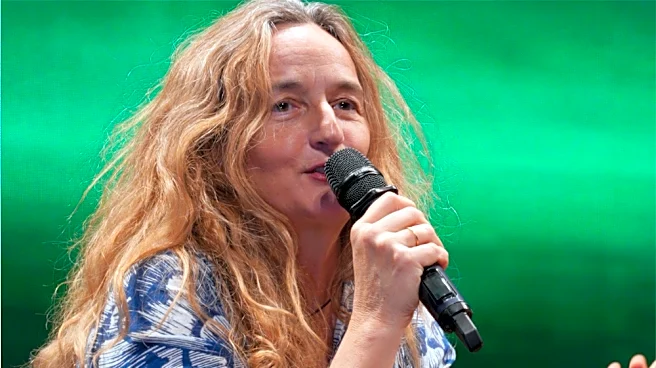
Garima Pura, co-writer of the Oscar-winning documentary 'The Elephant Whisperers,' is developing a new dark comedy film titled 'Nose Bone.' The film, presented at India's WAVES Film Bazaar, centers on a young Punjabi woman named Tooti who, upon turning
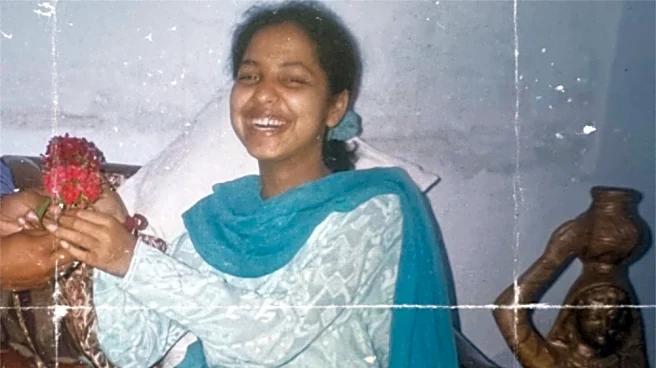
18, discovers she is pregnant. Fleeing an abusive uncle, Tooti races against the legal deadline for an abortion, taking on various odd jobs in a challenging job market and navigating backstreet clinics to afford the procedure. Her journey eventually leads her to work on a local politician's campaign trail. Pura describes the film as an exploration of allyship with minorities, solidarity among women, and institutional sexism, questioning the meaning of 'home' in the context of an abusive family. The narrative draws from Pura's experiences growing up in Punjab and Haryana, states known for low sex ratios, providing her with a unique perspective on women's struggles for survival.
Why It's Important?
This film is significant as it aims to bring to light the often-unspoken challenges women face regarding abortion access, particularly in regions where societal and financial support may be lacking. Pura's intention to portray these experiences with dark humor seeks to make the film cathartic for women and informative for others, fostering open conversations about sexual violence and the complexities of reproductive choices. The project highlights the disparities in healthcare access, questioning who can afford private clinics versus relying on potentially biased institutional support. By focusing on a woman's struggle to secure an abortion alone due to financial constraints and lack of support, 'Nose Bone' sheds light on systemic issues that impact women's autonomy and well-being, resonating with broader discussions about reproductive rights and healthcare equity.
What's Next?
Garima Pura is co-producing 'Nose Bone' with Kharcha Paani Talkies. The film has a budget of $262,510, with $65,000 already secured. The production team is actively seeking additional co-producers, financiers, and post-production partners, as well as support from international artist community labs, grants, and funds. A one-month shoot is planned across Panchkula, Mohali, and Chandigarh. The film's presentation at the WAVES Film Bazaar's Co-Production Market is a crucial step in securing the necessary funding and partnerships to bring the project to fruition. Successful fundraising and collaboration will enable the film to move into production, potentially leading to its eventual release and contribution to global cinematic discourse on women's issues.
Beyond the Headlines
Beyond its immediate narrative, 'Nose Bone' delves into deeper societal implications, particularly the intersection of gender, class, and institutional bias in healthcare. The film's setting in Punjab and Haryana, states with historically low sex ratios, provides a critical backdrop for exploring the systemic challenges women face. Pura's decision to use dark humor suggests an approach that aims to make difficult topics more accessible and relatable, potentially fostering empathy and understanding among diverse audiences. The film's exploration of 'home' as a potentially abusive space challenges traditional notions of family and safety, highlighting the need for broader societal support systems. By showcasing the resilience and solidarity among women in the face of adversity, 'Nose Bone' could contribute to a more nuanced understanding of women's experiences and advocate for greater equity and support.