








What's Happening?
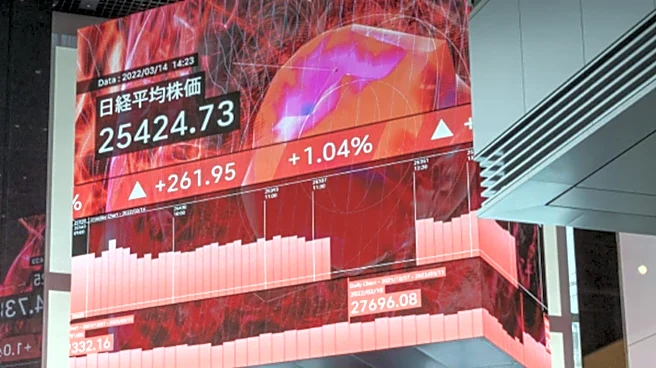
Asian stock markets displayed mixed performance on Wednesday, with semiconductor shares rallying in Japan, South Korea, and Taiwan, while Hong Kong and Chinese technology stocks faced pressure. Strong earnings reported by CoreWeave, an AI computing provider,
boosted optimism in the AI sector, leading to gains in technology shares across the region. However, hotter-than-expected U.S. inflation data for October revived concerns about potential further interest rate hikes by the Federal Reserve. Consumer prices rose 0.4% month-on-month, and core CPI increased 0.3%, exceeding expectations for the third consecutive month. This has led markets to price in a quarter-point Fed rate increase in December, with possibilities of more hikes by June.
Why It's Important?
The mixed performance in Asian markets, heavily influenced by U.S. economic indicators, underscores the interconnectedness of global financial systems. For the U.S. economy, persistent inflation and the prospect of further Federal Reserve rate hikes could impact borrowing costs for businesses and consumers, potentially slowing economic growth. The strong performance of AI-related companies like CoreWeave, despite broader economic concerns, highlights the continued investor confidence in the artificial intelligence sector as a key driver of future growth. However, the broader market's reaction to inflation data indicates that macroeconomic factors, particularly interest rate policies, remain a dominant force in shaping investor sentiment and capital allocation decisions, both domestically and internationally.
What's Next?
The Federal Reserve's upcoming decisions on interest rates will be closely watched by global markets, including those in Asia. Further rate hikes could lead to increased volatility in equity markets and potentially strengthen the U.S. dollar, impacting international trade and investment flows. Companies in the AI sector will continue to be under scrutiny to maintain their growth trajectories and justify high valuations. Investors will be looking for signs of cooling inflation in future U.S. economic reports to gauge the likelihood of a pause or reversal in the Fed's tightening cycle. The interplay between technological advancements and macroeconomic policy will continue to shape market dynamics in the coming months.
Beyond the Headlines
The current market environment reflects a complex interplay of technological optimism and economic uncertainty. While the AI boom, exemplified by CoreWeave's strong performance, suggests a new frontier for economic expansion, the persistent inflation in the U.S. points to underlying structural issues in the global supply chain and labor markets. This dual narrative creates a challenging landscape for policymakers, who must balance stimulating innovation with maintaining price stability. The potential for a prolonged period of higher interest rates could re-evaluate investment strategies, favoring sectors with strong cash flows and less reliance on cheap credit. It also highlights the increasing influence of U.S. economic policy on global markets, demonstrating how domestic decisions can have far-reaching international consequences.